Millions of readers have picked up Mad Honey without knowing that the honey at the center of the story actually exists. It is not a made up substance invented for dramatic effect. It is a real, rare type of honey that has been harvested in the mountains of Nepal and Turkey for thousands of years, and it is the same honey we source and sell here at Original Mad Honey.
This guide explains everything about the Mad Honey book, its authors, its plot, and most importantly, how much of the “mad honey” in the novel is grounded in real science versus fiction.
Mad Honey Book At a Glance
| Question | Quick Answer |
|---|---|
| What is the Mad Honey book? | A 2022 novel by Jodi Picoult and Jennifer Finney Boylan about a beekeeper, her son, and a murder trial in New Hampshire |
| Who wrote it? | Jodi Picoult and Jennifer Finney Boylan, co authors |
| Is mad honey a real thing? | Yes. It is a genuine honey containing grayanotoxins, produced mainly in Nepal and Turkey |
| Is the poisoning in the book realistic? | Partly. The honey and its effects are real, but the forensic detection shown in the story is exaggerated for the plot |
| Where can you find real mad honey today? | Nepal and Turkey are the two main producing regions, with Himalayan mad honey considered the strongest variety |
| Is it dangerous to eat? | It can be, in large amounts. Small, controlled doses are traditionally considered safe for healthy adults |
What Is the Mad Honey Book About?
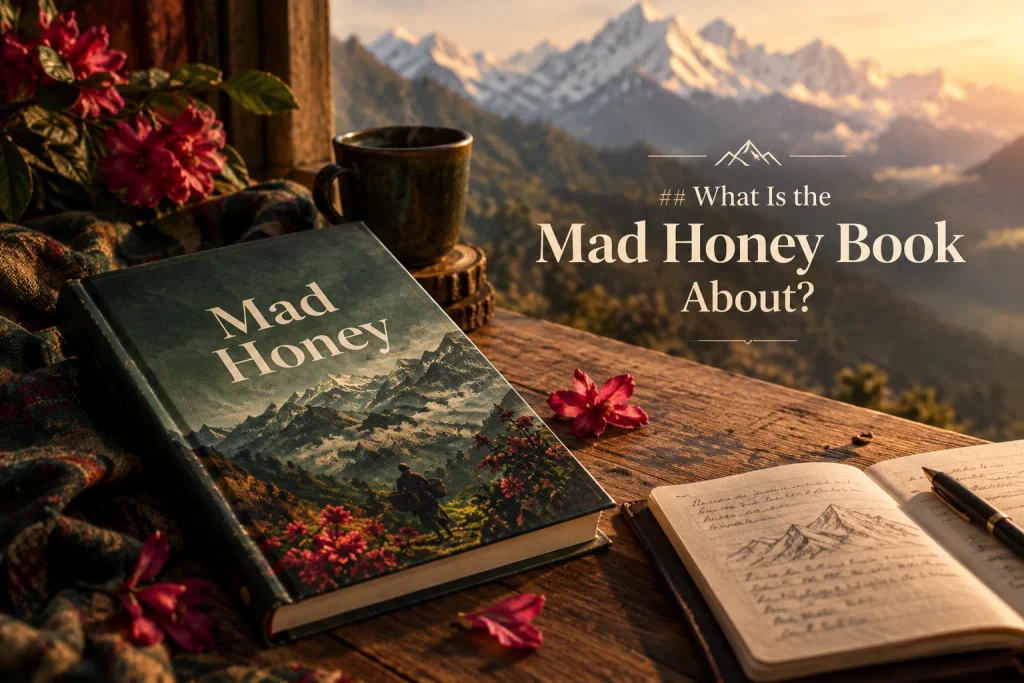
Mad Honey follows Olivia McAfee, a beekeeper who left an abusive marriage and returned to her small New Hampshire hometown to raise her son, Asher, and take over her father’s honey business. Years later, Asher is a popular high school senior dating a new girl in town named Lily Campanello. When Lily is found dead at the bottom of a staircase, Asher is arrested and charged with her murder.
The novel is told through alternating perspectives, moving between Olivia in the present and Lily in the months leading up to her death, slowly revealing secrets that neither character saw coming. Along the way, Olivia’s beekeeping work becomes a running thread throughout the book, tying the behavior of bees and honey to the larger themes of trust, identity, and the things people hide from each other.
Who Wrote Mad Honey?
Mad Honey was co written by two established American authors, Jodi Picoult and Jennifer Finney Boylan.
Jodi Picoult is a number one New York Times bestselling author known for novels such as “My Sister’s Keeper,” “Small Great Things,” and “The Book of Two Ways.” Jennifer Finney Boylan is the author of more than a dozen books, a longtime opinion columnist for the New York Times, and a professor of English at Barnard College of Columbia University.
According to an account published by author Lorie Kleiner Eckert, the idea for the book came to Boylan in a dream in 2017, where the entire plot, including its twist, appeared to her fully formed. She reportedly posted about the dream on social media and received an immediate reply from Picoult, who was drawn to the concept and agreed on the spot to co write the novel with her .
Why Is It Called Mad Honey?
The title comes directly from the honey Olivia’s family produces and sells in the story. In the novel, Olivia is a beekeeper who shares detailed knowledge about bees and honey throughout the book, and the concept of mad honey becomes a central metaphor.
The idea works on two levels. Literally, mad honey refers to a real substance that looks and tastes similar to ordinary honey but carries a hidden compound capable of altering the body in unexpected ways. Metaphorically, the authors use it to represent the characters themselves: people who appear sweet and safe on the surface while concealing something far more complicated, and sometimes dangerous, underneath.
According to a review published on the HWRHS General Consensus student news site, one of the honey’s defining qualities in the story is that people are drawn to it precisely because they expect sweetness, not harm, and by the time its true effects surface, it is already too late.
Is Mad Honey Real? Fact vs Fiction
This is the question most readers search for after finishing the book, and the answer is yes. Mad honey is a genuine, documented substance.
Real mad honey is produced when bees collect nectar almost exclusively from rhododendron flowers. These flowers contain a natural compound called grayanotoxin, and when bees forage heavily on rhododendron blooms, enough of this compound ends up in the finished honey to produce measurable effects on the human body. According to Wikipedia’s summary of the topic, mad honey is produced principally in Nepal and Turkey, where it has been used both as a traditional medicine and, in some cases, as a recreational substance .
A peer reviewed article published on the National Institutes of Health’s PMC database explains that mad honey poisoning is most commonly reported in Turkey, Korea, and Nepal, and that grayanotoxins are extracted by bees from several rhododendron species including R. luteum, R. ponticum, and R. simsii . This lines up closely with what the novel describes, though the book compresses and dramatizes the science for storytelling purposes.
If you want to go deeper into the real compound behind the story, our full guide on what mad honey actually is covers the science, the taste, and the traditional uses in detail.
The Real Origins of Mad Honey: Nepal and Turkey
The novel is set in New Hampshire, but the honey itself has roots on the other side of the world.
In Nepal, mad honey is harvested by the Gurung people, who have practiced a dangerous cliff harvesting tradition for centuries. Twice a year, honey hunters climb hand built rope and bamboo ladders down sheer rock faces in the Himalayas to reach wild combs built by Apis laboriosa, the largest honey bee species on earth. These bees forage on wild rhododendron blooms found at altitudes above 2,500 metres, which is part of why Himalayan mad honey is generally considered the most potent version in the world. You can read more about this tradition in our piece on Nepal’s Gurung honey hunters.
In Turkey, mad honey is known locally as deli bal, which translates to mad honey in Turkish. It has been produced for centuries in the Black Sea provinces of Rize and Trabzon, using managed beehives placed near fields of Rhododendron ponticum and Rhododendron luteum. Turkish deli bal tends to be milder than the Himalayan variety, with a lighter flavor and lower grayanotoxin concentration.
Both regions share the same underlying botanical source, the rhododendron flower, which you can learn more about on our rhododendron flowers page.
How Accurate Is the Poisoning Storyline?
One of the more dramatic plot points in Mad Honey involves grayanotoxin being detected in a character’s system after death, with this detail becoming important evidence later in the story.
In reality, this part of the plot takes some creative liberty. According to an analysis published comparing the novel’s plot to real forensic practice, grayanotoxins are not included in the standard toxicology panels most medical examiners use, such as routine GC MS or LC MS/MS screening. Detecting them typically requires specialized testing, most often high performance liquid chromatography paired with tandem mass spectrometry, along with reference standards that most forensic labs simply do not keep on hand . In other words, the honey and its active compound are real, but a courtroom relying on quick, routine toxicology results to prove grayanotoxin poisoning is a dramatized version of how this would likely unfold in practice.
What the book gets right is the basic mechanism. Grayanotoxin genuinely affects sodium channels in nerve and cardiac cells, and in large enough doses it can cause a slowed heart rate, dangerously low blood pressure, nausea, and in severe cases, loss of consciousness. These are documented, real world effects, not something invented for the plot.
What the Book Gets Right About Beekeeping and Honey Culture
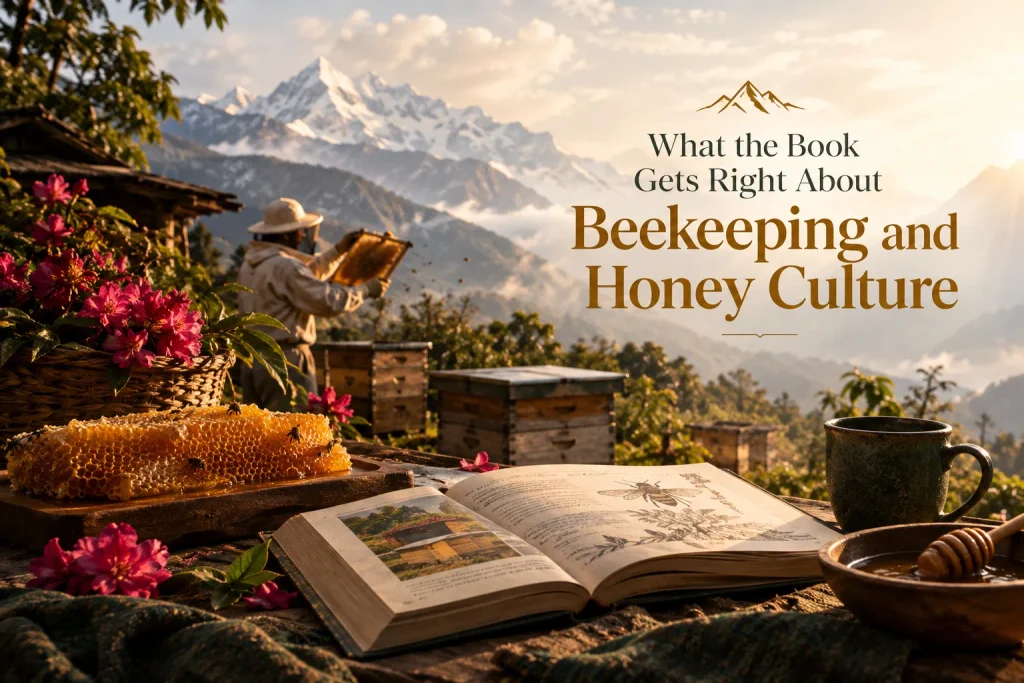
Beyond the toxicology, the novel captures something true about how seriously traditional honey producing communities treat this particular honey. Olivia’s careful, almost reverent relationship with her bees throughout the book mirrors the real attitude found in Himalayan and Turkish honey hunting communities, where mad honey has never been treated as an ordinary sweetener.
According to a study summary published on SuperSummary, the novel repeatedly uses beekeeping as a lens for understanding the characters’ relationships and hidden histories, reflecting real world respect for how much care traditional harvesters place on timing, dosage, and ritual around this honey . This same respect for dosage and tradition is exactly what governs how mad honey is harvested and consumed today in Nepal, where the harvest happens only twice a year and where local communities have always understood it as something to be taken thoughtfully, not carelessly.
How the Story Ends, Briefly Explained
Without spoiling every detail for readers who have not finished the book yet, the central mystery around Lily’s death is eventually resolved as an accident rather than a deliberate act, following a heated confrontation. A secondary revelation involving grayanotoxin exposure earlier in the story helps explain another character’s past behavior, though it does not excuse it. According to a plot analysis published on GoodNovel, the ending is deliberately left somewhat open rather than neatly resolved, which many readers found to be a fitting way to close out a story built around difficult family history and complicated truths .
Should You Try Real Mad Honey After Reading the Book?
Many readers finish the novel curious about trying the real thing, and that curiosity is completely understandable. Real mad honey is legal to buy and consume in most countries, including the United States and the United Kingdom, but it is not something to treat casually.
A few points worth knowing before you try it:
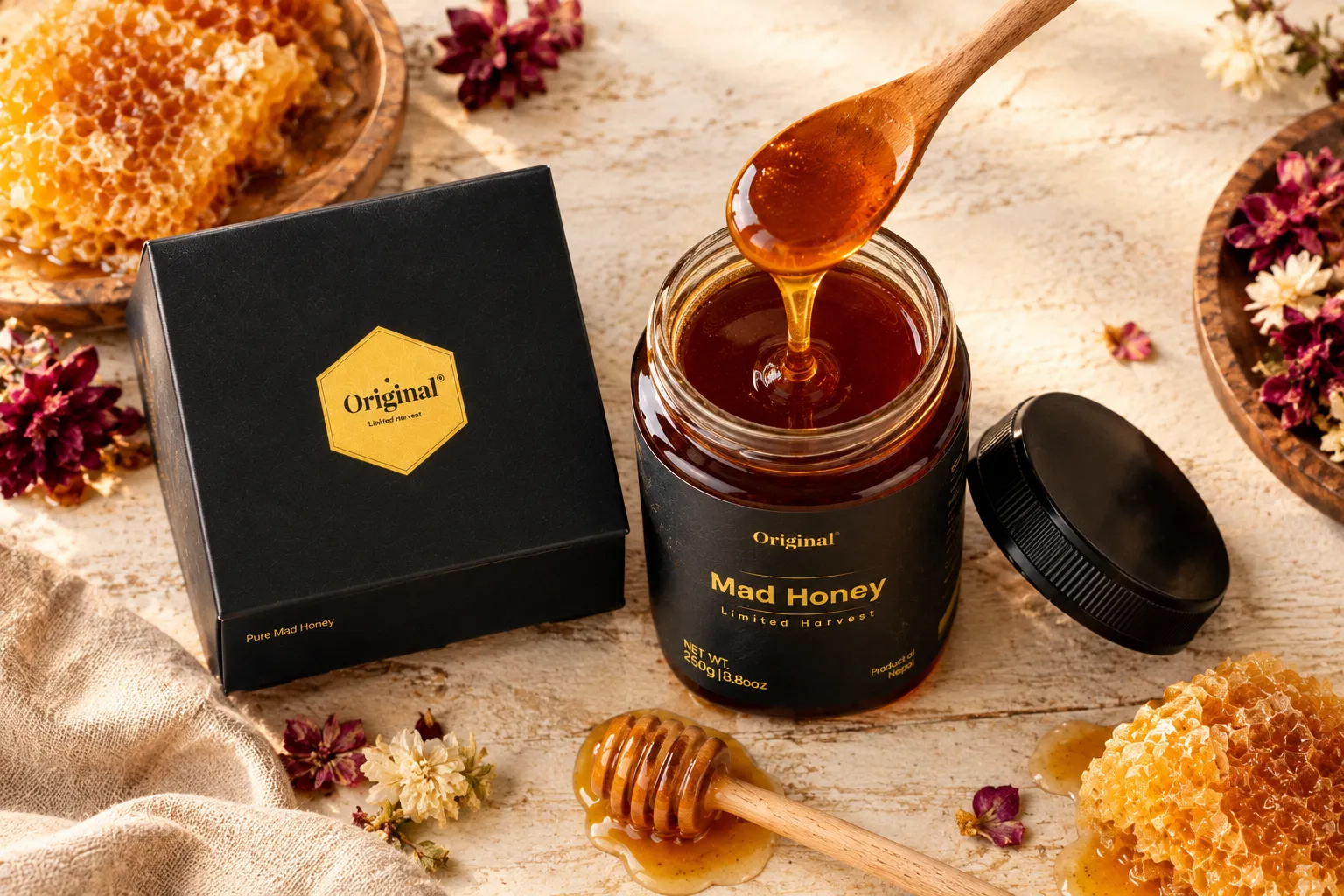
- Authentic mad honey is thick, dark reddish brown, and carries a mild bitter, tannic aftertaste that ordinary honey does not have.
- Traditional serving sizes are small, generally around one quarter to half a teaspoon for a first time user.
- It should be avoided entirely by pregnant or breastfeeding women, anyone under 18, and anyone with heart conditions or blood pressure issues, or who is taking heart or blood pressure medication.
- Genuine sellers should be able to show lab testing for grayanotoxin concentration and clear batch traceability back to the harvest.
You can see our own lab reports for exactly this kind of transparency, and our guide to mad honey and blood pressure goes into more detail on who should avoid it and why.
How to Buy Genuine Mad Honey
If the book left you wanting to experience the honey behind the story for yourself, sourcing matters enormously. Because mad honey is rare, seasonal, and harder to produce than ordinary honey, the market unfortunately includes diluted and mislabeled products.
When buying, look for:
- A clear country of origin, ideally Nepal or Turkey.
- Batch specific lab testing showing grayanotoxin concentration.
- A defined harvest season, since authentic mad honey is only collected in spring and autumn.
- Direct traceability to the harvesting community rather than a generic, unnamed supplier.
Our buy mad honey page walks through exactly what to check before ordering, and our shop carries lab tested Himalayan mad honey sourced directly from Gurung cliff hunters in Nepal’s Annapurna range, including our 250g jar and 500g jar. You can also read the full background on where our honey comes from on our mad honey origin page and learn more about our sourcing on our about us page.
Frequently Asked Questions
Is mad honey from the book a real thing?
Yes. Mad honey is a genuine substance produced mainly in Nepal and Turkey. It comes from bees that forage on rhododendron flowers containing a natural compound called grayanotoxin.
Is the Mad Honey novel based on a true story?
No, the plot and characters are fictional. However, the honey itself, its properties, and its long documented history of use and occasional poisoning cases are real and well established.
What is grayanotoxin?
Grayanotoxin is a natural compound found in rhododendron plants. When bees collect nectar heavily from these flowers, the toxin becomes concentrated in the resulting honey, producing effects that range from mild warmth and relaxation at small doses to nausea, dizziness, and a dangerously slowed heart rate at high doses.
Can real mad honey actually kill you like it does in the book?
In very large, uncontrolled doses, mad honey poisoning can become a medical emergency requiring treatment for a dangerously low heart rate and blood pressure. However, a 2015 review covering nearly 1,200 documented poisoning cases found no reported deaths in cases where medical care was available, which suggests that with prompt treatment, serious outcomes are uncommon even in severe cases.
Where can I buy the same type of honey described in the book?
Authentic mad honey is available from specialist Himalayan and Turkish producers. Our Original Mad Honey shop sources directly from Gurung cliff hunters in Nepal and lab tests every batch for grayanotoxin concentration and purity.
Conclusion
Mad Honey works so well as a novel precisely because its central symbol is not invented. The honey Olivia harvests, the caution she treats it with, and the quiet danger running underneath something that looks perfectly ordinary are all rooted in a real tradition that stretches back thousands of years in Nepal and Turkey. The forensic details are stretched for the sake of the story, but the honey itself, its grayanotoxin content, its history, and the respect traditional harvesters hold for it are entirely genuine.
If the book sparked your curiosity, the real version of mad honey is available today, still harvested the same careful way it always has been, twice a year, from wild cliffs thousands of metres up in the Himalayas.
References
- Mad honey. Wikipedia. https://en.wikipedia.org/wiki/Mad_honey
- Mad honey poisoning: a comprehensive review. PMC, National Center for Biotechnology Information. https://pmc.ncbi.nlm.nih.gov/articles/PMC9080652
- Jodi Picoult. Mad Honey (2022), official author page. https://www.jodipicoult.com/mad-honey.html
- Mad Honey: A GMA Book Club Pick. Penguin Random House. https://www.penguinrandomhouse.com/books/598975/mad-honey-a-gma-book-club-pick-by-jodi-picoult-and-jennifer-finney-boylan/
- Mad Honey Summary and Study Guide. SuperSummary. https://www.supersummary.com/mad-honey/summary/
- Mad Honey by Jodi Picoult and Jennifer Finney Boylan. Lorie Kleiner Eckert, 2023. https://www.loriekleinereckert.com/2023/08/04/mad-honey-by-jodi-picoult-and-jennifer-finney-boylan/
- What Is The Ending Of Mad Honey Explained. GoodNovel. https://www.goodnovel.com/qa/ending-mad-honey-explained
- Mad Honey Book Review. HWRHS General Consensus. https://hwrhsgeneralconsensus.com/10919/arts-entertainment/mad-honey-book-review/
- Jodi Picoult’s Mad Honey: Fact Vs. Fiction Explained, 2026. https://www.alibaba.com/product-insights/jodi-picoult-s-mad-honey-fact-vs-fiction-explained.html