
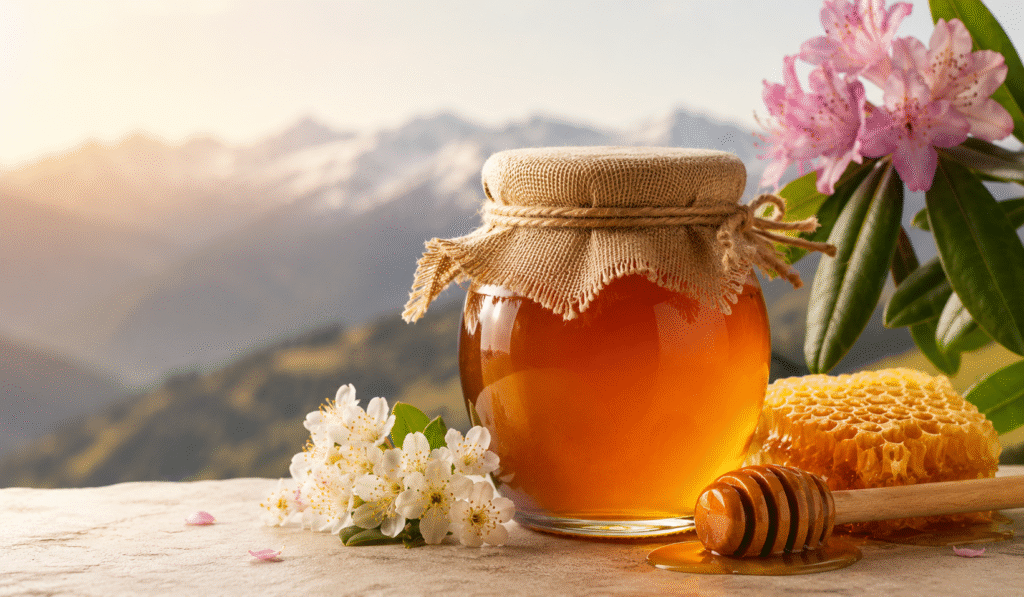
Mad Honey is a rare natural honey that comes from the high mountain regions of the Himalayas. Over the past few years, it has started gaining attention in the United States, especially among people interested in natural wellness and traditional food sources.
In cities like New York, Los Angeles, Chicago, Houston, Miami, Seattle, and San Francisco, there is a noticeable shift toward exploring organic, natural, and traditionally sourced products. This growing curiosity has brought attention to unique natural foods like Mad Honey, which have a deep cultural and environmental background.
Unlike regular commercial honey, Mad Honey is produced in limited quantities and is closely connected to its natural environment and traditional harvesting methods.
Mad Honey is produced by bees that collect nectar from wild rhododendron flowers found in specific Himalayan regions. These flowers grow naturally in high-altitude environments, where conditions remain untouched by industrial farming.
Because of this unique source, the honey carries characteristics that make it different from standard honey varieties. It is traditionally collected by local communities who have been practicing beekeeping in these mountain regions for generations.
This natural and cultural background is one of the main reasons Mad Honey is now being discussed globally, including in wellness communities across the United States.
Interest in Mad Honey is growing steadily in the United States due to the rising demand for natural and globally sourced wellness products. People in major cities such as New York and Los Angeles are often early adopters of global health and wellness trends, which has helped increase awareness of rare natural products.
In Chicago and Houston, the interest is driven by a combination of cultural diversity and growing awareness of natural alternatives. Miami and Seattle also reflect strong engagement with organic and ethically sourced products, while San Francisco continues to be a major hub for natural lifestyle trends.
Mad Honey fits into this broader shift because it represents something rare, natural, and culturally meaningful.
Mad Honey comes primarily from Himalayan regions such as Nepal, where it has been harvested for centuries. The process is deeply connected to traditional knowledge passed down through generations of local beekeepers.
Harvesting is done in challenging mountain environments, which makes production limited and highly specialized. This connection to nature and tradition adds to the uniqueness of Mad Honey and sets it apart from mass-produced honey products.
For many people in the USA, this origin story is part of what makes it interesting, as there is growing appreciation for authentic and culturally rooted products.
In the United States, there is a clear trend toward natural wellness and organic living. People are increasingly interested in understanding where their food comes from and how it is produced.
This is especially visible in cities like New York, Los Angeles, Chicago, and San Francisco, where wellness culture plays a major role in lifestyle choices. The interest is not only about health but also about exploring unique global foods and traditional practices.
Mad Honey has become part of this broader interest because it represents a rare natural product with a strong cultural background and limited availability.
When discussing rare natural products like Mad Honey, it is important to approach them with awareness and responsibility. Like many traditional natural substances, understanding its strength, origin, and proper context is essential.
People in the USA who explore such products often do so with a focus on learning and cultural curiosity rather than routine use. Responsible awareness helps ensure that natural products are respected for their origin and traditional significance.
At Original Mad Honey, the focus remains on maintaining authenticity and respecting the natural origins of the product. The honey is sourced from Himalayan regions where traditional harvesting methods are still practiced.
This approach ensures that the cultural and environmental balance of the region is respected. Instead of mass production, the emphasis is placed on quality, authenticity, and preservation of traditional methods.
This is also important for modern consumers in the USA who value transparency and ethical sourcing in the products they choose.
Mad Honey is more than just a rare natural product. It represents a connection between Himalayan tradition and modern global interest. In the United States, especially in cities like New York, Los Angeles, Chicago, Houston, Miami, Seattle, and San Francisco, curiosity about such unique natural products continues to grow.
As interest in natural wellness products increases, Mad Honey stands out due to its rarity, origin, and cultural significance. However, it should always be understood with awareness and respect for its traditional background.
This growing global attention shows how natural products from remote regions can become part of modern wellness discussions while still preserving their cultural identity.