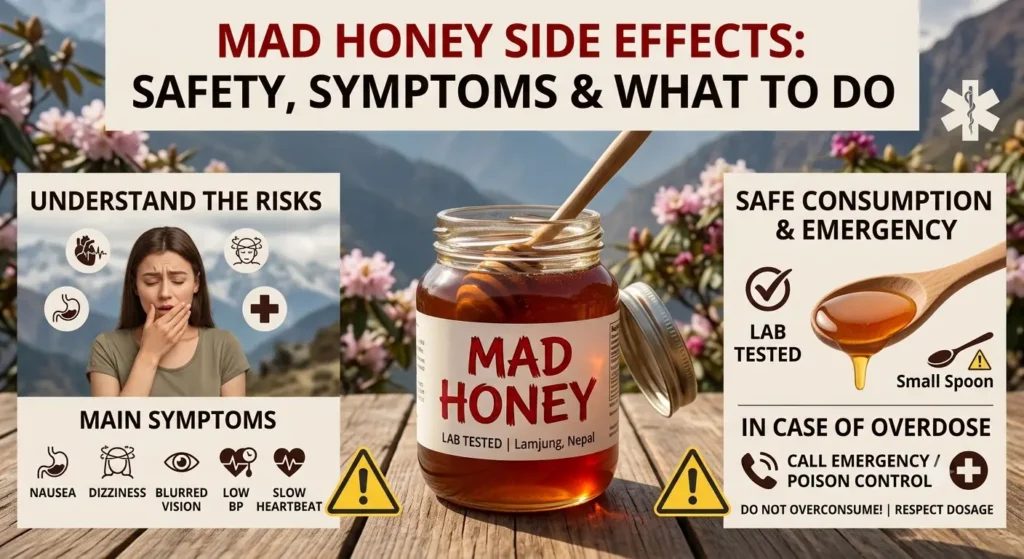
Mad honey is generally well-tolerated when taken in small, traditional amounts — but because it contains grayanotoxins, it isn’t risk-free the way regular honey is. Understanding the possible side effects, who should avoid it, and what to do if something goes wrong is just as important as knowing how to enjoy it safely.
This guide covers mad honey’s real, documented risks in plain language — not to scare you away from a product with centuries of traditional use behind it, but so you can make an informed decision and know exactly what to watch for.
Is Mad Honey Safe?
For most healthy adults, mad honey is safe when consumed in small, traditional amounts (see our dosage guide for specifics). The vast majority of reported issues come from people taking far more than the traditional serving, often because they underestimate its potency. Our full answer to is mad honey safe covers what the actual research and case reports say, and where the real risk threshold sits.
Mad Honey Poisoning
When too much grayanotoxin is consumed, it can lead to a condition medically documented as “mad honey poisoning” (sometimes called grayanotoxin poisoning). It’s a recognized clinical condition, particularly documented in regions of Turkey and Nepal where mad honey is traditionally consumed, and it’s almost always linked to overconsumption rather than normal, moderate use. Our detailed page on mad honey poisoning explains how it happens, how common it actually is, and how it’s typically treated.
Symptoms to Watch For
The most commonly reported symptoms of taking too much mad honey include:
- Nausea and vomiting
- Dizziness or lightheadedness
- Excessive sweating
- Blurred vision
- Low blood pressure
- Slowed or irregular heartbeat
- Numbness or tingling around the mouth
Symptoms typically appear within an hour of consumption and are usually mild to moderate, resolving on their own within several hours. Our full symptoms guide breaks down what’s considered mild versus what warrants medical attention.
Who Should Avoid Mad Honey?
Mad honey isn’t appropriate for everyone. Certain groups face a meaningfully higher risk and should avoid it altogether, or only use it under medical supervision. We cover the full list in who should avoid mad honey, but it primarily includes people who are pregnant, have cardiovascular conditions, or take certain medications — covered in more detail below.
Pregnancy
Mad honey is not recommended during pregnancy. Grayanotoxins affect blood pressure and heart rate, and there isn’t sufficient safety data to confirm it poses no risk to a developing pregnancy. The safest approach is to avoid it entirely while pregnant or breastfeeding.
Heart Patients
Because grayanotoxins act on the cardiovascular system — slowing heart rate and lowering blood pressure — anyone with an existing heart condition, arrhythmia, or history of low blood pressure faces a higher risk of complications. Full detail is in mad honey for heart patients; the short version is that this group should not use mad honey without a doctor’s explicit clearance.
Drug Interactions
Mad honey can interact with several common medications, particularly those already affecting heart rate or blood pressure — including beta-blockers, calcium channel blockers, and other blood pressure medications. Combining these with mad honey can amplify its effects unpredictably. See drug interactions for a fuller list of medications to be cautious with, and always check with a pharmacist or doctor if you take regular medication.
Overdose
Taking a significantly larger amount than the traditional serving can lead to a more serious version of the symptoms above — sometimes including fainting, a markedly slowed heart rate, or difficulty breathing. While most cases resolve with rest and supportive care, severe overdose has, in rare documented cases, required medical treatment. Our page on mad honey overdose covers what an overdose actually looks like versus normal side effects, and why respecting dosage guidance matters so much.
How Long Do Side Effects Last?
For most people, mild side effects resolve within 2 to 6 hours as the body processes the grayanotoxins. More significant symptoms from a larger dose can occasionally last up to 24 hours. If symptoms persist well beyond that, or worsen rather than improve, seek medical attention. Full detail in how long do side effects last.
Emergency Guide: What to Do If Something Goes Wrong
If you or someone else shows severe symptoms after consuming mad honey — fainting, a very slow or irregular heartbeat, chest pain, or difficulty breathing — treat it as a medical emergency:
- Call emergency services or your local poison control center immediately.
- Keep the person lying down with their legs slightly elevated if they feel faint.
- Do not give them anything else to eat or drink.
- Stay with them and monitor their breathing and consciousness until help arrives.
- If possible, tell medical responders how much mad honey was consumed and when.
This isn’t the typical outcome for someone following normal serving guidance, but knowing these steps matters if something does go wrong. Our full emergency guide covers this in more detail.
Choose Lab-Tested Mad Honey to Minimize Risk
The single biggest factor in avoiding side effects is knowing your honey’s actual potency. Unverified, untested mad honey sold without lab certification is where most serious incidents originate — because the buyer has no way to judge a safe amount.
Every batch we sell is lab-tested for grayanotoxin levels and traceable to the specific cliff face in Lamjung, Nepal, where it was harvested.
👉 Shop Original Mad Honey — Free Worldwide Shipping
Frequently Asked Questions
Is mad honey poisoning common?
No. Documented cases are almost always linked to significant overconsumption, often from unverified or untested honey. Following standard serving guidance greatly reduces the risk.
What should I do if I feel unwell after taking mad honey?
Sit or lie down, stay calm, and monitor your symptoms. If they’re mild (nausea, dizziness), they typically pass within a few hours. If they’re severe (fainting, irregular heartbeat, difficulty breathing), seek medical attention immediately.
Can mad honey side effects be dangerous?
In typical, moderate use, side effects are usually mild and temporary. In cases of significant overconsumption, more serious cardiovascular effects are possible, which is why dosage and sourcing both matter.
Who should never try mad honey?
Pregnant or breastfeeding women, children, and anyone with a heart condition or on blood pressure medication should avoid mad honey unless specifically cleared by a doctor.