How Long Does Honey Last? Shelf Life, Storage Tips, and Signs of Spoilage
Honey that is sealed, dry and clean can last for years, and well kept pure honey can stay usable long after the date printed on the jar. That is the


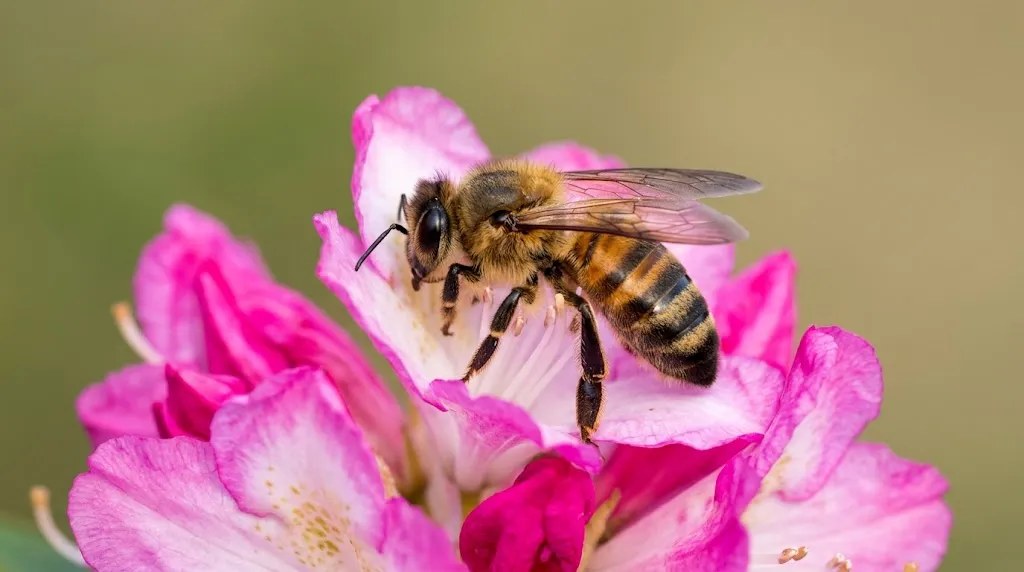
High on the cliffs of the Himalayas, above 2,500 meters where the air thins and few animals venture, a single honeycomb can stretch the size of a door — home to tens of thousands of bees nearly twice the size of the ones in your backyard garden. This is Apis laboriosa, the Himalayan giant honey bee, and it is the reason mad honey exists at all. No other bee species on Earth produces it.
Apis laboriosa is the world’s largest living honey bee species. Adult workers measure up to 3 centimeters (about 1.2 inches) in length — roughly 1.5 to 2 times the size of Apis mellifera, the common Western honey bee most people picture when they think of honeybees. It belongs to the genus Apis within the family Apidae, and was first formally described by Frederick Smith in 1871.
| Rank | Classification |
|---|---|
| Kingdom | Animalia |
| Phylum | Arthropoda |
| Class | Insecta |
| Order | Hymenoptera |
| Family | Apidae |
| Genus | Apis |
| Species | A. laboriosa |
| Binomial name | Apis laboriosa Smith, 1871 |
For much of the 20th century, Apis laboriosa wasn’t considered its own species at all — it was treated as a high-altitude subspecies of Apis dorsata, the giant honey bee found more widely across South and Southeast Asia. That changed in 1980, when researcher Shôichi F. Sakagami elevated it to full species status based on morphological differences.
The classification then went back and forth: entomologist Michael S. Engel reclassified it as a subspecies of A. dorsata again in 1999, reigniting nearly two decades of scientific debate. The question was finally settled in 2020, when researchers confirmed A. laboriosa as a valid, distinct species — based on evidence that it co-occurs with A. dorsata at multiple sites in the wild without interbreeding, supported by genetic sequencing showing millions of years of reproductive isolation between the two.
Apis laboriosa is a geographically specialized species, restricted to the Hindu Kush–Himalayan mountain belt and neighboring ranges. Confirmed populations span from central Nepal across to Yunnan Province in China, with documented range extending as far as northern Vietnam. It has also been recorded in Bhutan, parts of northern India, Laos, and Myanmar.
Within this range, the bee is highly selective about nesting sites. Colonies build a single, large, exposed comb beneath steep cliff overhangs — typically at elevations above 2,500 meters, though populations have been documented as low as roughly 1,200–1,700 meters in some regions. This preference for extreme, hard-to-reach terrain is precisely why the species remained so poorly studied for so long: scientists have historically had to rely on local honey-hunting communities to gather specimens and field observations, since the nesting sites are barely accessible even for trained researchers.
Every physical trait of Apis laboriosa reflects adaptation to a harsh, high-altitude environment:
Apis laboriosa‘s most well-known distinction is biochemical, not physical: it is one of the only pollinators able to forage extensively on wild rhododendron nectar, which contains naturally occurring grayanotoxins toxic to many other foraging insects and animals. Research suggests the species possesses enzymes capable of metabolizing these compounds, giving it access to a nectar source most competitors avoid entirely.
When colonies forage on rhododendron blooms during specific seasonal windows — most notably in spring, at the peak of the bloom — the resulting honey concentrates these grayanotoxins. This is the honey known internationally as mad honey, and in Nepal specifically referred to by names like cliff honey or red honey.
Because this ecological relationship is so specific — one bee species, one narrow nectar source, one cliff-based habitat — authentic mad honey cannot be reliably replicated anywhere else in the world. It’s a direct product of Apis laboriosa‘s unique biology.
Beyond producing mad honey, Apis laboriosa plays an outsized ecological role. Its willingness to forage on rhododendron — a plant many other pollinators avoid due to its toxicity — makes it a critical pollinator for high-altitude plant communities, including rhododendron itself, apple orchards, and various medicinal herb species relied on by mountain communities. Estimates suggest a substantial share of Nepal’s high-altitude agricultural crops depend on pollinators from this ecological niche.
Colonies are also seasonally migratory, relocating between nesting sites as flowering patterns shift through the year — a behavior first mapped in detail by researcher B.A. Underwood’s field studies in the late 1980s and early 1990s.
Unlike Apis mellifera, which is widely kept in managed hives, Apis laboriosa has never been successfully domesticated. Every jar of authentic mad honey comes from wild colonies, harvested directly from cliff faces by honey-hunting communities — most notably the Gurung people of Nepal, who have practiced this twice-yearly harvest for generations using traditional rope-ladder techniques and smoke to calm the colony during collection.
A single comb can hold a striking volume of honey, though the difficulty and danger of reaching it is precisely what keeps genuine mad honey a limited, seasonal product rather than a mass-market commodity.
Understanding Apis laboriosa isn’t just a matter of natural history — it’s directly relevant to spotting authentic mad honey. Because this bee only exists in specific high-Himalayan habitats and only produces grayanotoxin-rich honey when foraging on wild rhododendron during particular seasonal windows, genuine mad honey is inherently limited in supply and traceable to specific harvest regions. A seller unable to speak to sourcing, altitude, or harvest season with real specificity is a signal worth taking seriously — because the biology behind this honey simply doesn’t allow for the kind of year-round, unlimited supply that generic honey production does. Batch-specific, lab-verified sourcing — the kind Original Mad Honey documents for every harvest — is what actually reflects how this bee and this honey work in the wild.
This article is for informational and educational purposes only.
Honey that is sealed, dry and clean can last for years, and well kept pure honey can stay usable long after the date printed on the jar. That is the
There are four ways to sort the types of honey: by the flower the bees visited, by color, by form such as raw or creamed, and by the species of
Honey benefits for men are real but modest. The best human evidence shows that honey can lower fasting blood sugar and cholesterol when it replaces other sugar, and that it