

Is Honey Good for You? 10 Health Benefits
Honey is good for you in a few specific ways, but it is not a health food. It can soothe a cough, help burns heal when doctors use medical grade
Hallucinogenic honey is mad honey, a rare honey that bees make from rhododendron nectar. The label is popular, but it hides the real picture. In the largest review, which covered 1,199 cases, the most common complaints were dizziness, nausea and near fainting, and a slow heart rate showed up on the ECG in most patients. Some people do report strange sensations, so the name is not baseless. This guide explains what is in the honey, what hospital reports show, how Nepal and Turkey differ, where the law stands, and why nobody should treat it as a party drug.
So what is mad honey? It is honey that contains grayanotoxins, natural compounds that come from rhododendron nectar. Wikipedia describes it as dark reddish and slightly bitter. If you typed whats mad honey into a search bar, that is the whole answer: honey made by bees, with a plant toxin in it. People call it hallucinogenic honey because some who eat too much report odd sensations. The name arrived long before the clinical evidence did.
The Nepal version is made by the Himalayan giant honey bee, Apis laboriosa, in spring when rhododendrons bloom. IFLScience reports that a single hive can hold up to 60 kg of honey.
Rhododendron honey is not one product. Mad honey is mainly produced and consumed in Turkey and Nepal, Wikipedia says. In a 2023 review of 900 poisoning cases by Gunduz and colleagues, 91.44 percent of the honey came from Turkey and 4.67 percent from Nepal, and the pattern of cases followed where Rhododendron species grow. The German Federal Institute for Risk Assessment names Rhododendron luteum and Rhododendron ponticum on the Turkish Black Sea coast, and similar honeys in the mountains of Spain and Portugal and in the Alps. The United States makes very little, mainly in the Appalachians.
Ordinary honey is not hallucinogenic. Honey hallucinogenic effects trace back to grayanotoxins. These compounds bind sodium channels in nerve and heart cells and keep them from closing. A review in Cardiovascular Toxicology links the main symptoms to sodium channels that stay active and to a stronger vagal tone, which is the nerve signal that slows the heart.
The dose is the problem. A researcher at the University of Hohenheim, Prayan Pokharel, writes that the toxic dose varies by batch, season and location, so two jars of the same honey can act very differently.
Sometimes, but it is not the typical result. The largest review, by Silici and Atayoglu in 2015, covered 1,199 cases reported between 1981 and 2014. The most common complaints were dizziness, nausea and near fainting, a slow heart rate appeared on the ECG in 79.58 percent of cases, and no deaths were reported. The Gunduz review of 900 cases found a slow heart rate in 88.48 percent and low blood pressure in 76.04 percent.
The Cardiovascular Toxicology review lists impaired consciousness, convulsion, dizziness and visual disturbance as the nervous system signs and does not mention hallucinations. In a Nepal case series of five patients treated in 2022 and 2023, all five had low blood pressure and a slow heart rate, and hallucinations were not reported.
Some cases do describe them. Wikipedia lists hallucinations among the effects of milder intoxication. The Utah Poison Control Center describes a 50 year old woman who had chest pain, lightheadedness and hallucinations after eating mad honey. Her blood pressure was 90 over 60 and her heart rate was in the 50s. She recovered after atropine and fluids and went home the next day. Mad honey hallucinogenic effects are real for some people and absent for others, and the heart effect is the part that sends people to hospital.
Headlines also call it psychedelic honey or hallucinating honey. Those names suggest a trip. A toxicologist quoted by Freethink describes the usual effect as warm and relaxed, closer to a sedative than to a classic psychedelic. Grayanotoxin acts on sodium channels, and I found no study that compares its effects with classic psychedelics, so this guide does not make that comparison. Think of it as a plant toxin that can also change perception, not as a recreational psychedelic.
Hallucinogenic honey Nepal searches usually mean the cliff honey of the Gurung honey hunters. Wikipedia says the Gurung people of central Nepal traditionally hunt wild honey from cliff nests twice a year, in late spring and late fall, using rope ladders and smoke. Our jars come from Lamjung, where the harvests fall in April and October.
Pokharel reviewed 27 papers covering 68 patients. Nepal’s poisonings cluster in spring, when the main harvest happens, with a smaller wave in autumn. About 72 percent of the patients were middle aged men, many of whom ate the honey as a home remedy for high blood pressure or sexual function, and no deaths were reported in Nepal.
A Nepal honey hallucinogenic claim on a product page deserves care. Pokharel notes that online sellers do not always give warnings about safe amounts, and that doctors outside Nepal rarely see these poisonings, so a patient who does not mention the honey can delay the diagnosis. Tell any doctor you have eaten mad honey.
Mad honey is not for anyone under 18, anyone who is pregnant or breastfeeding, or anyone with a heart condition, low blood pressure or a slow heart rate. The German institute says one study suggests that people with cardiovascular disease who take blood pressure drugs may be more susceptible. In one reported case, a Nepali man on blood pressure medicine who had also drunk alcohol reached a heart rate of 40 beats per minute. Do not mix it with alcohol, and do not drive afterward.
Amounts can be small. The Himalayan Times reports hospital stays after as little as two teaspoons, and the German institute says that in the worst case a teaspoon could cause symptoms. Symptoms can start within minutes and up to five hours after eating, and the Cardiovascular Toxicology review says they usually last one to two days. The same Himalayan Times report says a Michigan man’s provider linked a psychotic episode in 2022 to over consumption of mad honey he reportedly bought without knowing what it was.
Never give any honey to a child under 1 year old. The CDC says honey can cause infant botulism. Speak to a doctor before you try mad honey. If you feel unwell, stop and get medical help. In the United States, Poison Help is 1 800 222 1222. You can read about the side effects in more detail.
Mostly yes, but no country has made it simple. Lucid News reports that harvesting is legal in Nepal in community managed forests, that protected areas need permits, and that Nepali rules do not define mad honey as its own product. Freethink adds that Nepal and Turkey allow production, sale and export. South Korea banned it in 2005. In the United States, the sources I reviewed report no rule written for mad honey, and the FDA lists grayanotoxins among natural toxins in food and calls the poisoning rare.
I found no source that lists grayanotoxin as a controlled substance, and no source that says it is not, so check with the authority in your country. The current mad honey laws differ by country and they change, and customs can stop a parcel. This is not legal advice.
You cannot make it at home. Bees make it from rhododendron nectar, in places where those plants bloom in large numbers while the bees forage. Nothing in the sources I read describes a safe way to copy that, so I will not give a method. Honey mixed with plant parts or other substances is not mad honey, and nobody can know its strength. If you want the real thing, buy it from a seller who shows a batch number and a lab report with grayanotoxin results.
No dose is proven safe. The German institute says no exact safe amount can be stated, and the amounts in the literature range from 5 to 180 grams. Our cautious guideline for healthy adults is to start with a quarter teaspoon after a light meal, wait at least 2 hours, and never go above half a teaspoon in a day. This is not medical advice, so speak to a doctor first. Color and taste cannot tell you the strength, so rely on the batch lab report. Mad honey is not a treatment for any condition, and the Cardiovascular Toxicology review says evidence for medicinal use is scarce and such use may be harmful.
It is mad honey, honey that bees make from rhododendron nectar. The nectar carries grayanotoxins, which end up in the honey. The Nepal kind is made by the Himalayan giant honey bee, Apis laboriosa.
Sometimes. Hallucinations appear in some case reports, but the largest reviews list dizziness, nausea, fainting, a slow heart rate and low blood pressure as the common problems. The heart effect is the main danger.
It is better described as a plant toxin that can change perception in some people. Most countries treat it as a food, not a drug, though the rules differ and South Korea banned it in 2005.
Symptoms usually begin 20 minutes to 3 hours after eating, the Cardiovascular Toxicology review says, and the German institute says they can begin within minutes and up to five hours. They usually last one to two days, and many people improve within a day with treatment.
It depends on the country. Nepal allows harvesting in community managed forests, and the sources I reviewed report no rule written for mad honey in the United States. South Korea banned it. Check current rules before ordering. This is not legal advice.
Deaths are rare. The 2015 review of 1,199 cases reported none. Still, a slow heart rate can progress to complete heart block, the Utah Poison Control Center notes, so treat any symptoms as a reason to get medical help.
There is no proven safe amount. Hospital stays have been reported after as little as two teaspoons, and the German institute says a teaspoon could cause symptoms in the worst case. Speak to a doctor before trying it.
Anyone under 18, anyone who is pregnant or breastfeeding, and anyone with a heart condition, low blood pressure or a slow heart rate. Also avoid it if you take heart or blood pressure medicine, and do not combine it with alcohol.
Hallucinogenic honey is real, and the name still oversells it. The evidence shows a honey that can slow the heart and drop blood pressure, with perception changes in some people. If you want to try it, use a small amount, buy only from a seller who shows a batch lab report, and speak to a doctor first.
Pages opened on 1 November 2026. I read them through a page summarizer, so wording is paraphrased.
Honey is good for you in a few specific ways, but it is not a health food. It can soothe a cough, help burns heal when doctors use medical grade
Mad honey is legal to buy and own in Texas, based on the laws I checked. Texas does not list grayanotoxin, the natural compound in mad honey, as a controlled
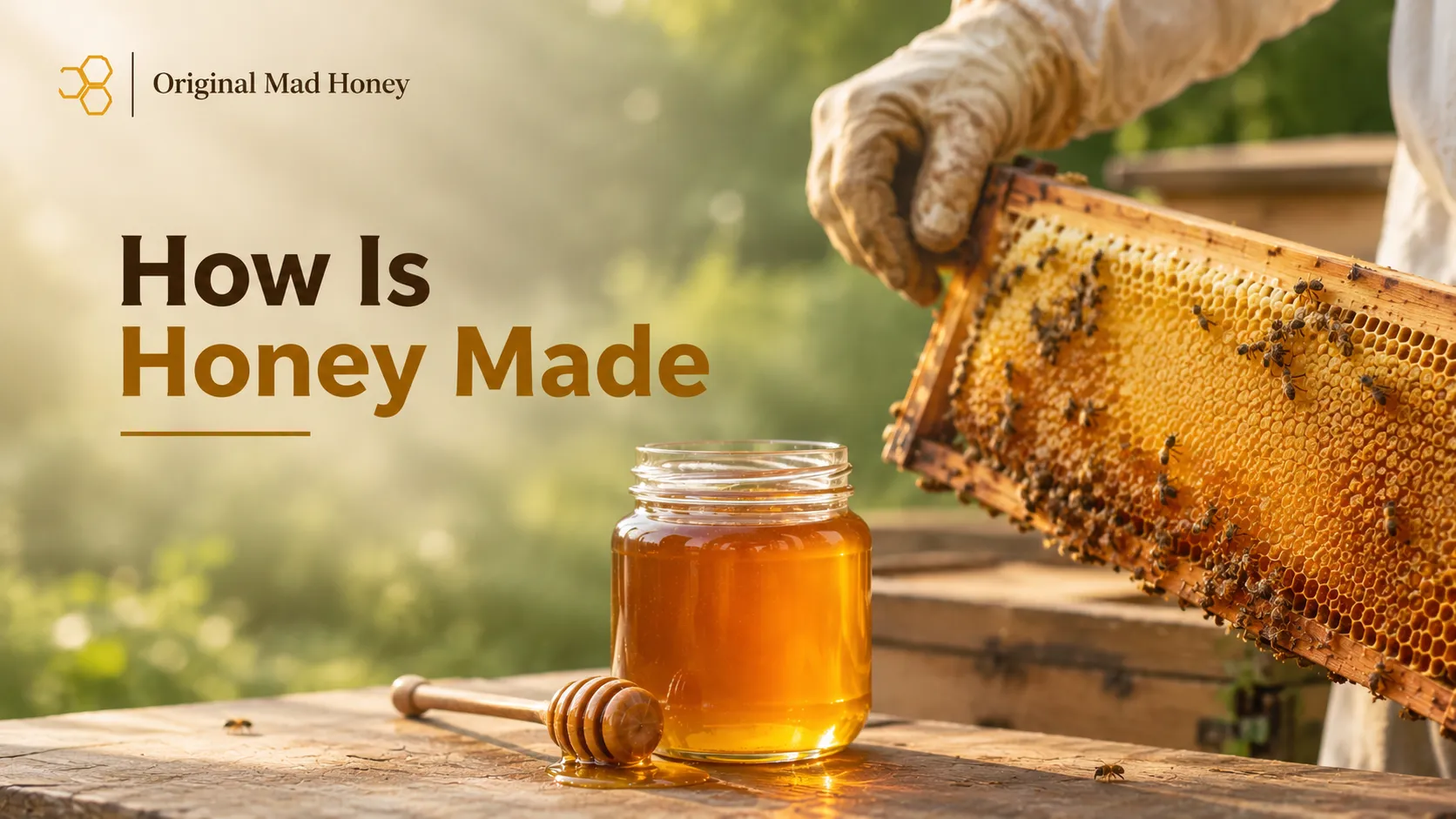
Honey is made by bees. Foragers collect flower nectar, house bees add enzymes and dry it in the hive, and the finished honey is sealed in wax. Beekeepers then spin