

How Long Does Honey Last? Shelf Life, Storage Tips, and Signs of Spoilage
Honey that is sealed, dry and clean can last for years, and well kept pure honey can stay usable long after the date printed on the jar. That is the
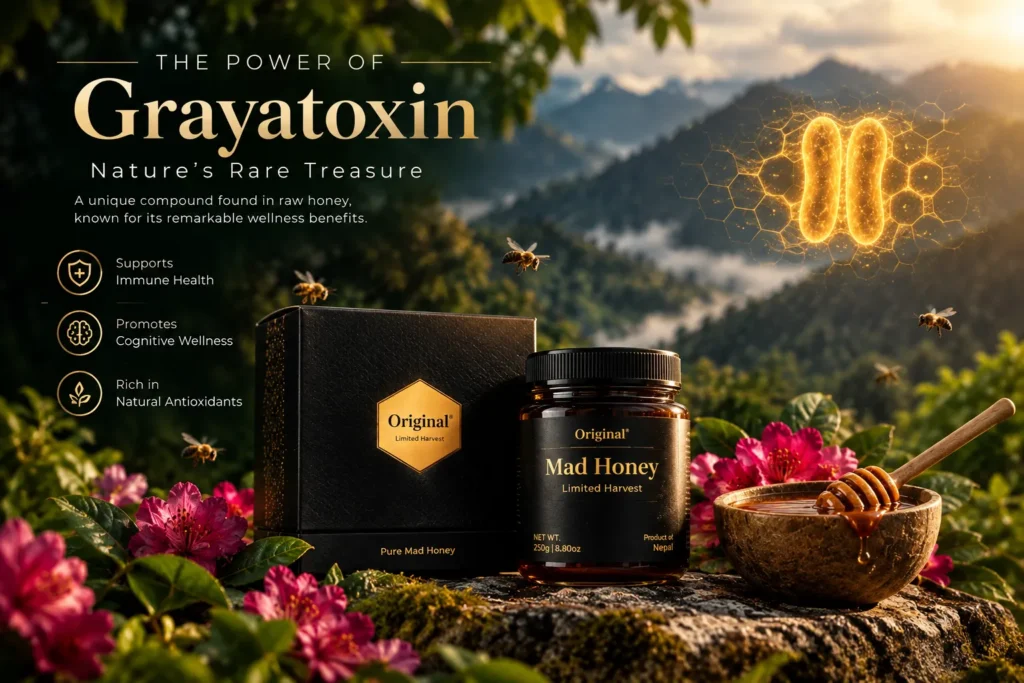
Deep in the misty highlands of Nepal and along the rugged cliffs of Turkey’s Black Sea coast, honeybees forage on rhododendron blossoms that most other bees avoid. The honey they produce is unlike anything found on a regular supermarket shelf. It is thick, reddish, slightly bitter, and carries a compound that has fascinated soldiers, historians, and scientists for over two thousand years.
That compound is grayanotoxin.
The earliest recorded encounter with this substance dates back to 401 BC, when the Greek historian Xenophon described his army falling ill after eating honey near the Black Sea. Soldiers reportedly collapsed, vomited, and lost their senses for hours, only to recover fully the next day. Centuries later, in 67 BC, King Mithridates of Pontus is said to have used honey laced with grayanotoxin as a weapon against invading Roman soldiers, leaving them disoriented before his troops attacked.
Today, that same honey, often called mad honey or deli bal, is sold as a wellness product and a recreational curiosity around the world. But very few buyers actually understand the toxin responsible for its effects. This guide breaks down what grayanotoxin is, how it works inside the human body, how long it stays in your system, and whether it can affect a drug test, all explained in plain language and backed by clinical research.
A quick note before we continue: this article is for educational purposes only and is not medical advice. Grayanotoxin is a genuine neurotoxin, and mad honey poisoning is a recognized medical condition. If you have a heart condition, take blood pressure medication, are pregnant, or are unsure about your health status, speak with a doctor before consuming any mad honey product.
Grayanotoxin is a naturally occurring diterpenoid neurotoxin produced by plants in the Ericaceae family, most notably several species of rhododendron, along with Pieris, Kalmia, and Agarista plants. These plants generate the toxin in their leaves, flowers, and nectar as a natural defense mechanism against herbivores and insects.
When honeybees collect nectar from rhododendron flowers, particularly Rhododendron ponticum and Rhododendron luteum, trace amounts of grayanotoxin end up in the honey they produce. According to a widely cited review published in Cardiovascular Toxicology, this is the mechanism behind what is medically known as grayanotoxin poisoning, mad honey disease, or rhododendron poisoning.
Chemically, grayanotoxin belongs to a class of compounds that interfere with voltage gated sodium channels in cell membranes. Unlike many plant toxins that simply block a receptor, grayanotoxin locks sodium channels into an open, activated state. This single mechanism explains almost everything about how mad honey affects the human body, and we will unpack it in detail further down.
Grayanotoxin is not one single molecule. It is actually a family of closely related compounds, and understanding the different types helps explain why mad honey from one region can feel noticeably different from honey harvested elsewhere.
Researchers have identified more than 25 individual grayanotoxin compounds, but only a handful appear consistently in honey and are considered clinically significant.
Grayanotoxin I is generally regarded as the most potent and the most commonly implicated compound in human poisoning cases reported from Turkey’s Black Sea region.
Grayanotoxin II is found alongside Grayanotoxin I in many rhododendron species and contributes to the overall toxicity profile of the honey.
Grayanotoxin III is one of the most frequently measured compounds in laboratory testing of mad honey, since it is relatively stable and easier to quantify using liquid chromatography methods.
The exact ratio and concentration of these compounds varies depending on the rhododendron species, the altitude at which the flowers grow, the season, and even the specific batch of honey. This is exactly why unregulated, untested mad honey is risky, and why lab verified sourcing matters so much when buying a grayanotoxin honey product.
Mad honey is produced in two main regions of the world, and while the underlying toxin is the same, the honey itself differs quite a bit.
In Nepal, mad honey comes from the world’s largest honeybee, Apis laboriosus, which builds enormous combs on sheer Himalayan cliff faces, often at altitudes above 2,500 meters. These bees forage on wild Rhododendron species that grow across the high mountain slopes of regions like Lamjung, Gorkha, and Taplejung.
Nepali mad honey is traditionally harvested by local honey hunters using handmade rope ladders and bamboo baskets, a practice that has been passed down for generations and is considered one of the most dangerous forms of honey harvesting in the world. Because the bees forage across vast, biodiverse mountain terrain, Nepali mad honey tends to have a more variable and often stronger grayanotoxin concentration, which is one reason experienced producers test each batch before it reaches a customer.
In Turkey, mad honey comes primarily from the Black Sea coastal region, where Rhododendron ponticum and Rhododendron luteum grow in dense clusters at lower altitudes. Turkish beekeeping tends to be more localized and commercial, with hives placed directly near rhododendron groves rather than wild foraging across a mountain range.
Turkish mad honey, often called deli bal, is generally milder and more consistent in potency compared to Nepali mad honey, largely because the bee species and foraging range are different.
Both regions produce authentic mad honey, but the concentration of grayanotoxin can vary significantly between a Nepali batch and a Turkish batch, and even between two harvests from the same region. This is why credible sellers openly test and disclose grayanotoxin levels rather than guessing.
To understand what grayanotoxin does, it helps to picture how your nerve and muscle cells normally communicate.
Every cell in your nervous system and heart relies on tiny gates called voltage gated sodium channels. Normally, these gates open briefly to let sodium rush into the cell, triggering a nerve signal or a heartbeat, and then they snap shut again almost instantly so the cell can reset. This rapid open and close cycle is what allows your heart to beat in a steady rhythm and your nerves to fire signals correctly.
Grayanotoxin interferes with this process in a very specific way. It binds to the sodium channel while it is open and prevents it from closing properly. Instead of a quick, controlled pulse of sodium, the channel stays open longer than it should, keeping the cell in a prolonged, excited state.
In simple terms, imagine a light switch that is supposed to flick on and off quickly, but grayanotoxin jams it in the “on” position for a bit longer than normal. This is what researchers mean when they classify grayanotoxin as a sodium channel agonist that prevents inactivation, as described in detail in a clinical toxicology review published in Clinical Toxicology.
This prolonged depolarization is especially noticeable in the vagus nerve, which controls heart rate. That is why the classic symptoms of mad honey poisoning are cholinergic in nature, meaning they mimic an overactive parasympathetic nervous system: a slow heart rate, dizziness, low blood pressure, and excessive sweating.
Not everyone who eats mad honey experiences the same effects. Dosage, body weight, individual sensitivity, and the specific grayanotoxin concentration of the honey all play a role. The table below summarizes what typically happens at different consumption levels, based on patterns reported in clinical case studies.
| Dose Level | Typical Amount | Common Effects |
|---|---|---|
| Micro dose | Less than half a teaspoon | Mild warmth, slight relaxation, light tingling, usually no noticeable symptoms |
| Low dose | Half to one teaspoon | Mild dizziness, light headedness, warm flushing sensation, gentle euphoria |
| Moderate dose | One to two teaspoons | Noticeable dizziness, sweating, nausea, muscle weakness, tingling in lips or fingers |
| High dose | More than two teaspoons | Severe dizziness, vomiting, blurred vision, low blood pressure, slowed heart rate, fainting |
| Excessive dose | Large uncontrolled amounts | Complete heart block, severe bradycardia, loss of consciousness, medical emergency |
This table is a general guide, not a precise dosing chart. Because grayanotoxin concentration is not visible or tasteable in honey, the same teaspoon from an untested batch could be far stronger than expected. For anyone new to mad honey, starting with a tiny amount and understanding the source of the honey is the single most important safety practice. A detailed breakdown of safe starting amounts is available on our mad honey dosage guide.
One of the most searched questions about this toxin is how long it actually lingers in the body. Unlike alcohol or many recreational substances, grayanotoxin does not have a widely standardized elimination half life documented in mainstream pharmacology, largely because it has never been developed or studied as a licensed pharmaceutical.
That said, clinical case data gives us a reasonably clear picture. According to case reports and toxicology reviews, including the review published in Clinical Toxicology, most people who experience mad honey poisoning see their symptoms peak within one to six hours of consumption and fully resolve within twelve to twenty four hours with supportive care. Severe cases, particularly those involving cardiac effects like AV block, can occasionally take a bit longer to fully normalize, but full recovery without lasting damage is the typical outcome.
In general terms:
This relatively short window is one reason mad honey poisoning, while alarming, is rarely fatal in healthy adults and generally responds well to basic supportive treatment like intravenous fluids and monitoring.
This question comes up constantly, and the short answer is no, not on a standard drug test.
Standard workplace and clinical drug panels, including 5 panel and 10 panel urine tests, are designed to detect specific classes of substances such as THC, opiates, cocaine, amphetamines, PCP, benzodiazepines, and barbiturates. Grayanotoxin is a plant derived cardiotoxin, not a controlled substance, and it is not included in any of these standard screening panels.
Researchers have developed specialized laboratory methods, such as LC-MS/MS, capable of detecting grayanotoxin in blood and urine samples, as demonstrated in a study published in Annals of Saudi Medicine. However, this kind of testing exists only in research and forensic toxicology settings. It is not something a standard workplace test, roadside test, or routine hospital panel is set up to detect, and there is currently no commercially available clinical test for it.
In practice, doctors diagnose mad honey poisoning through patient history and clinical symptoms, such as a recent history of eating unusual honey combined with bradycardia and low blood pressure, rather than through a specific lab test for the toxin itself.
Mad honey is not appropriate for everyone, and taking it seriously as a bioactive substance rather than a novelty is important.
People who should avoid mad honey entirely:
If someone shows signs of mad honey poisoning, which typically include dizziness, sweating, nausea, blurred vision, a noticeably slow heart rate, or fainting, the standard medical response according to toxicology literature involves close monitoring of heart rhythm and blood pressure, intravenous fluids, and atropine in cases of significant bradycardia. Most patients recover fully within a day with this kind of supportive care.
If you or someone near you experiences severe symptoms such as fainting, chest pain, or a very slow or irregular heartbeat after consuming mad honey, seek emergency medical attention immediately. This is a real medical event, not something to manage at home by waiting it out.
Given how much grayanotoxin concentration can vary between batches and regions, buying mad honey without any testing or transparency is genuinely risky. Anyone searching for grayanotoxin honey for sale should look for a few specific things before making a purchase.
What to look for in an authentic, safe product:
At Original Mad Honey, every batch sourced from the high altitude rhododendron forests of Nepal is lab tested before it reaches a customer, and the results are made available rather than hidden behind marketing claims. You can review our current lab results on our lab report page, explore our full range of authentic Nepali mad honey on the shop page, or head straight to our dedicated buy mad honey page if you already know what you are looking for.
If you want to understand mad honey more broadly before buying, our mad honey overview page is a good starting point.
Buying grayanotoxin honey should never feel like a gamble. A transparent seller will always be willing to show you exactly what is in the jar.
Grayanotoxin is a naturally occurring neurotoxin produced by rhododendron and related Ericaceae plants. It ends up in honey when bees forage on rhododendron nectar, and it works by keeping voltage gated sodium channels in cells locked open, which produces the dizziness, low blood pressure, and slowed heart rate associated with mad honey.
No. Standard drug tests, including workplace 5 panel and 10 panel urine screens, are designed to detect substances like THC, opiates, cocaine, and amphetamines. Grayanotoxin is not part of any standard drug panel, so consuming mad honey will not trigger a positive result on a typical drug test.
Routine drug tests do not. Specialized laboratory techniques like LC-MS/MS can detect grayanotoxin in blood or urine, but these methods exist only in toxicology research and forensic settings, not in standard clinical or workplace testing. There is currently no commercially available drug test that screens for it.
Based on documented clinical cases, effects typically begin within 20 minutes to 2 hours of consumption, peak between 1 and 6 hours, and fully resolve within 24 hours in most healthy adults with appropriate rest and, if needed, supportive medical care. More severe cases involving cardiac symptoms may take somewhat longer to fully stabilize.
Grayanotoxin is one of the more fascinating compounds found in nature, a toxin that has shaped historical battles, folk medicine traditions, and modern curiosity all at once. Understanding how it works, from its origin in rhododendron nectar to its precise action on sodium channels in your cells, makes it clear why mad honey deserves both respect and caution.
It is not a substance to guess your way through. The difference between a pleasant, mild experience and a trip to the emergency room often comes down to dosage and the quality of the honey itself. Choosing a lab tested, transparently sourced product, starting with a small amount, and being honest with yourself about any underlying health conditions are the real keys to enjoying mad honey responsibly.
If you are ready to explore authentic, lab verified mad honey sourced directly from Nepal’s high altitude rhododendron forests, take a look at what Original Mad Honey has to offer, and always start low, go slow, and know exactly what is in your jar.
Disclaimer: This article is intended for general educational purposes only and does not constitute medical advice. Grayanotoxin is a real neurotoxin capable of causing serious health effects, including dangerous changes in heart rate and blood pressure. Always consult a qualified healthcare provider before consuming mad honey, especially if you have a heart condition, take medication, are pregnant, or have any other health concerns.
Honey that is sealed, dry and clean can last for years, and well kept pure honey can stay usable long after the date printed on the jar. That is the

There are four ways to sort the types of honey: by the flower the bees visited, by color, by form such as raw or creamed, and by the species of
Honey benefits for men are real but modest. The best human evidence shows that honey can lower fasting blood sugar and cholesterol when it replaces other sugar, and that it