Is Honey Good for You? 10 Health Benefits
Honey is good for you in a few specific ways, but it is not a health food. It can soothe a cough, help burns heal when doctors use medical grade


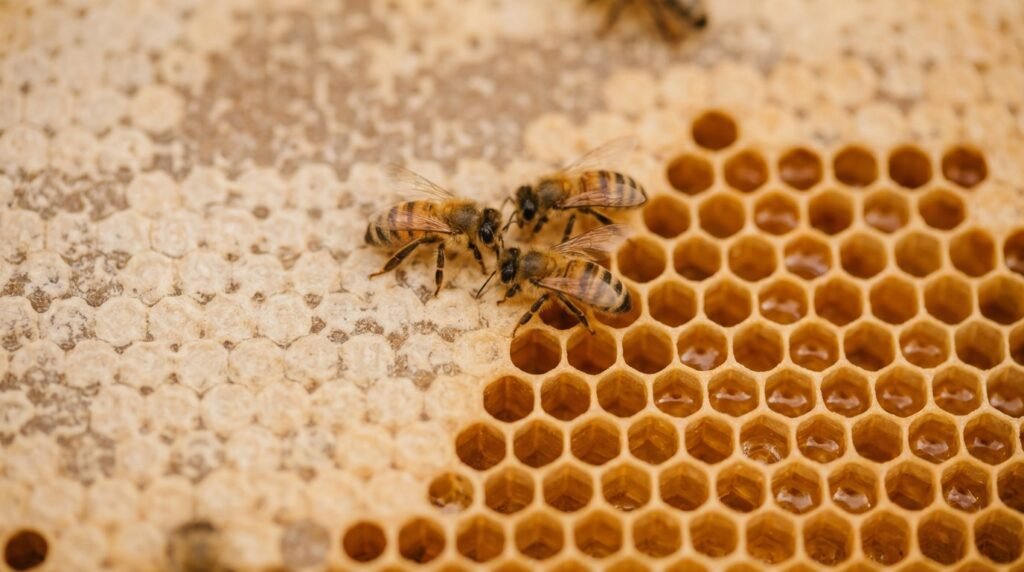
Bees make honey to feed their colony. It is the food store that carries a honey bee colony through winter and through any stretch when flowers give little nectar. That is the plain answer to why do bees make honey, and the rest of this guide shows how nectar becomes honey, how much a hive needs and why people can still harvest some of it.
The details change with climate and colony size. A hive in the northern United States needs far more honey than a hive in southern England, and the numbers below come from named beekeeping and university sources so you can see where each one comes from. If you ask how and why do bees make honey, you will find the two halves answer each other: the way bees make it is built around the reason they make it.
Honey bees do not hibernate. The British Beekeepers Association explains that a honey bee colony spends winter together, clustering for warmth, so it must store food in summer to last through the cold months. The association contrasts this with wasps and bumblebees, which handle winter differently.
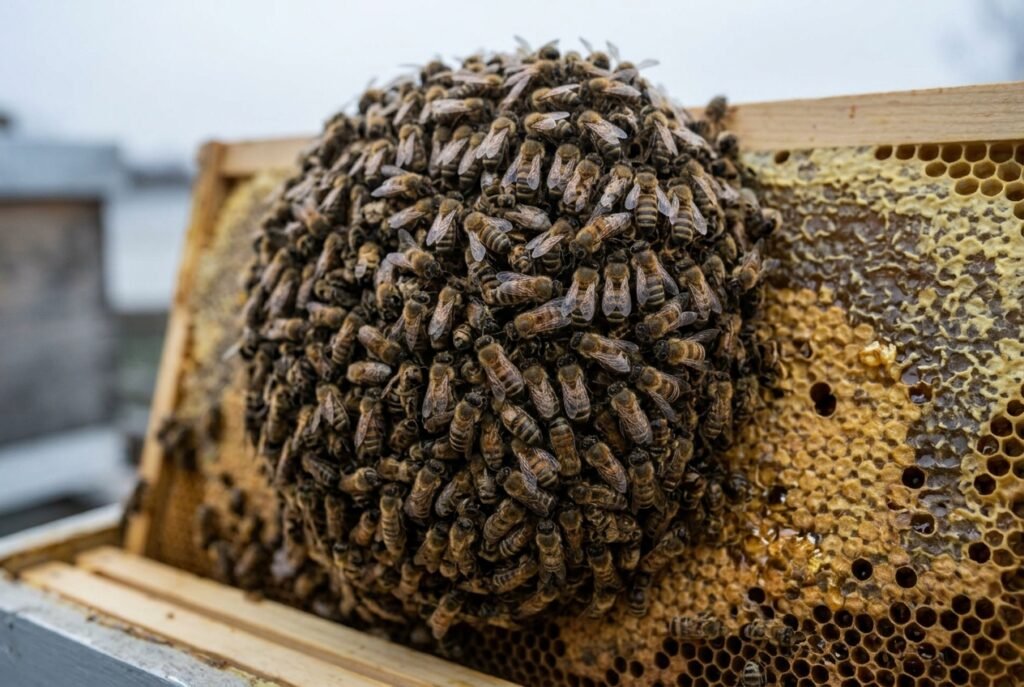
Bees cannot forage when it is cold, so the stores in the hive are the food supply. A University of Florida extension guide by James Ellis and Katherine Hammons says a colony in the North should have about 90 pounds of honey reserves for winter. The winter cluster slowly eats its way upward through the stores, so food has to be above and beside the bees. The same guide says a healthy overwintering colony holds about 25,000 to 30,000 bees and that colonies under 15,000 are unlikely to survive freezing temperatures.
Winter is the obvious gap, but it is not the only one. New Zealand Honey Co, a honey seller that cites its sources, notes that nectar is unreliable across places, seasons and plants, so bees store it for lean periods. In that account honey supplies the energy, and pollen supplies the protein. Research on honey bee nutrition by Wright, Nicolson and Shafir in the Annual Review of Entomology, which Buzz About Bees cites for winter feeding, looks at the same question from the biology side.
A colony spends energy keeping its home at the right temperature. Buzz About Bees points out that wing beating to regulate hive temperature uses a lot of energy, which is why bees need a dependable store of sugar. Honey is that fuel.
Why do the bees make honey, and not just keep the raw nectar? Because nectar is mostly water. A University of Arkansas Extension post by Jon Zawislak says nectar is often more than 75 percent water. Removing that water shrinks the volume, so the bees need less hive space. Lower moisture also keeps airborne yeasts from becoming active, which prevents fermentation. Raw nectar would take up room and ferment. Honey stays stable.
The need for a long term store is what sets honey bees apart. Buzz About Bees notes that bumble bees store nectar only briefly because their colonies are short lived, while a honey bee colony has to last through winter. Searches such as why do bee make honey usually picture one bee working alone, but no single bee could do it. A commonly quoted figure is that a worker makes about one twelfth of a teaspoon of honey in her lifetime. It appears on both WorldAtlas and New Zealand Honey Co. Neither is a primary source, so read it as a rough guide.
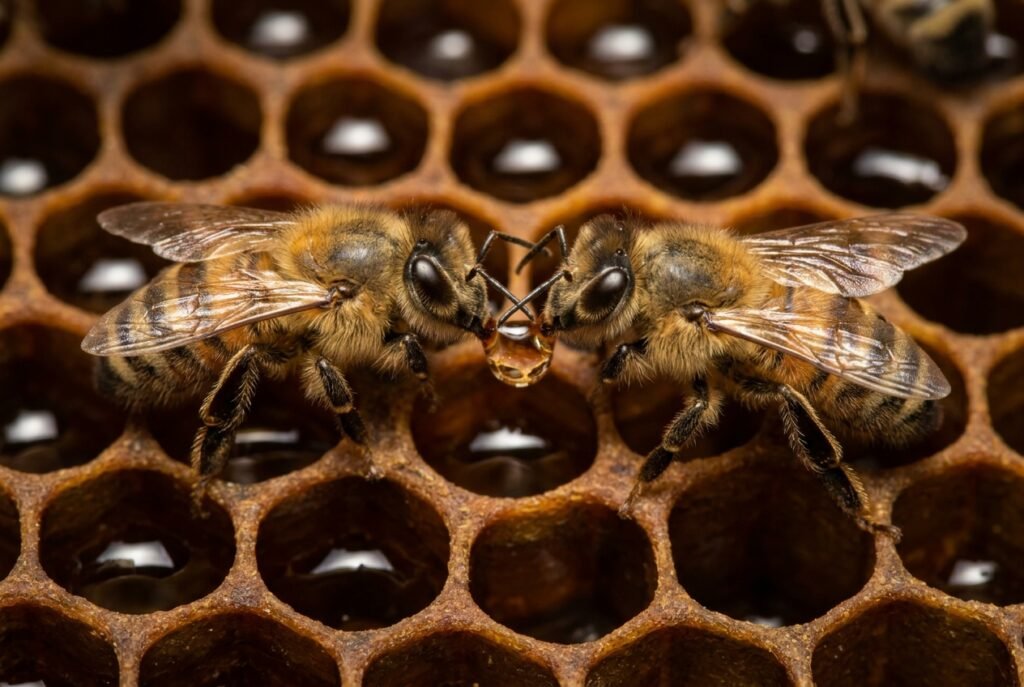
How is honey made from something that is mostly water? By taking the water out and changing the sugar. The process is a relay between bees of different ages.
Forager bees collect nectar in a honey stomach. Mississippi State University Extension says that stomach can hold up to one third of the bee’s body weight, and that foragers add an enzyme called invertase as they swallow the nectar. The University of Arkansas post calls the same enzyme sucrase. It splits sucrose into glucose and fructose. Foragers then pass the nectar to younger house bees, who spread it in thin droplets to speed evaporation. Food handling bees add another enzyme, glucose oxidase, as they place the nectar in wax cells. I found no source showing that drones or the queen take part.
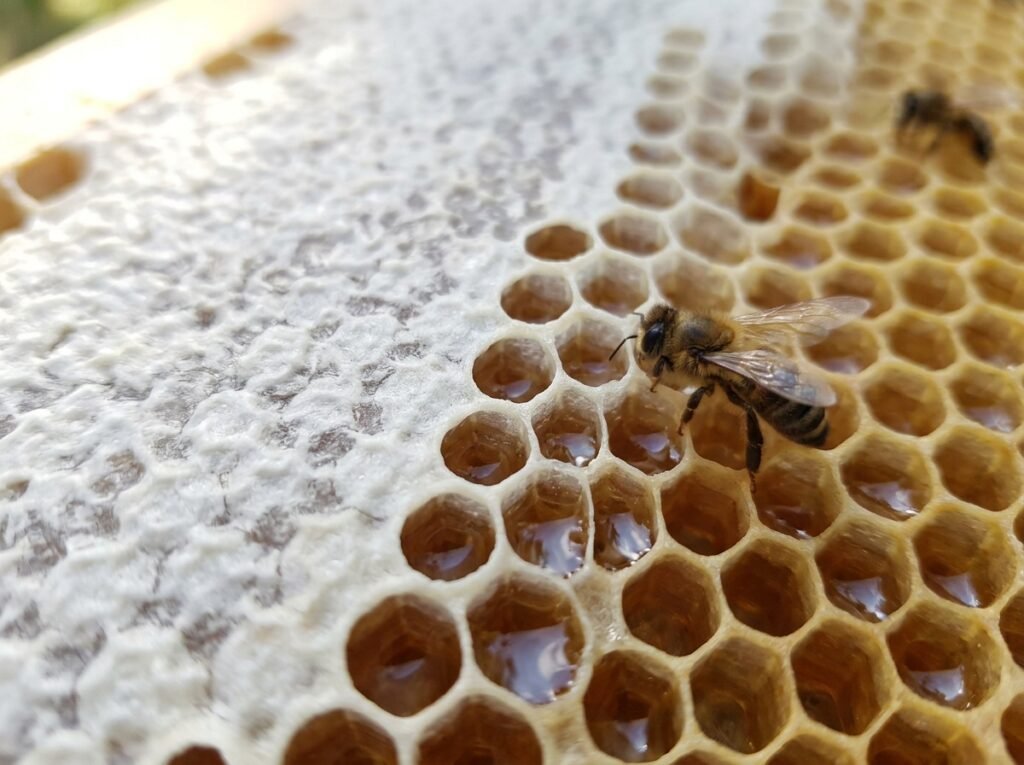
This is how honey bee produce honey, and how bees make honey wherever they live:
Mississippi State Extension gives the same figure of about 18 percent for finished honey and says that low moisture makes honey less likely to ferment and spoil.
The answer depends on where the hive sits. The British Beekeepers Association says a UK hive needs about 20 to 30 pounds of honey to survive an average winter, a good season can yield 60 pounds or more, and the average surplus is about 25 pounds. A strong colony can make two to three times what it needs. The association also says making one pound of honey takes bees about 55,000 miles of flight.
Colder places ask for much more. The University of Florida guide gives about 90 pounds for northern colonies. A Utah State University Extension page says an established Utah colony should usually have 80 to 100 pounds of capped honey, roughly 10 to 12 deep frames. These figures come from different winters and different hives, so treat them as ranges for each region and not as rules.
Honey is about 80 percent sugar and only 17 to 18 percent water, as Healthline explains. It is also acidic, with a pH between 3.4 and 6.1, and it makes small amounts of hydrogen peroxide through glucose oxidase. Buzz About Bees puts it simply: bacteria and fungi cannot multiply in high concentrations of sugar. The National Honey Board says honey in sealed containers can remain stable for decades.
Water is the exception. A New Zealand beekeeping paper citing USDA data says honey above 19 percent moisture can be expected to ferment in the year after harvest, which is why bees cap honey only when it is dry enough.
The fair amount is the surplus. A strong colony can make two to three times what it needs, according to the British Beekeepers Association, so a beekeeper can take the extra while leaving the winter stores. Both the University of Florida and Utah State guides stress leaving enough. Utah State warns against removing so much honey that the bees run short before spring, and the Florida guide says a colony short on stores can be fed sugar syrup, mixed at 2 parts sucrose to 1 part water, in the fall. Mississippi State Extension adds that commercial beekeepers encourage colonies to produce more than they need.
Some people choose not to eat honey at all. That is a personal choice, and this guide does not argue against it.

Mad honey follows the same logic with a different nectar. The Himalayan giant honey bee, Apis laboriosa, nests on cliffs in the Himalayas, and in Nepal its honey comes from rhododendron nectar that contains grayanotoxins, as the Wikipedia entry on mad honey summarizes. The bees store it as food, like any honey. Nothing in the sources I read suggests they make it for another purpose. The toxin matters to people, because it can lower blood pressure and slow the heart. You can read more about what mad honey is and about the Himalayan mad honey harvested in Nepal.
The CDC advises that you never give honey to a child under 1 year old because of the risk of infant botulism. Mad honey is not for anyone under 18, anyone who is pregnant or breastfeeding, or anyone with a heart condition, low blood pressure or a slow heart rate. Speak to a doctor before trying it.
Why do bees make honey?
They make it as the colony’s food store. Honey bees stay active through winter and cannot forage in the cold, so they keep honey to eat when little or no nectar is available. The British Beekeepers Association describes honey as the food that carries the colony through the cold months.
Do bees make honey for humans?
No. Bees make it for their own colony. People can take the surplus, which the British Beekeepers Association says can be two to three times what a strong colony needs, as long as enough stays in the hive for winter.
How much honey does one bee make in her life?
A commonly quoted figure is about one twelfth of a teaspoon. WorldAtlas and New Zealand Honey Co both repeat it, but neither names a primary study, so treat it as an estimate.
How long does it take bees to make honey?
I did not find a reliable source that gives a single time from nectar to capped honey, so I will not give a number. The steps are known, and they are listed in the article above. The time depends on the nectar flow and on how fast the water leaves the nectar.
Do all bees make honey?
Not in the same way. According to Buzz About Bees, bumble bees store nectar only briefly because their colonies are short lived, while honey bees store a lot of honey to survive winter as a colony.
How much honey does a hive need for winter?
It depends on the climate. The British Beekeepers Association says a UK hive needs about 20 to 30 pounds. The University of Florida guide says about 90 pounds in the North, and Utah State University Extension says 80 to 100 pounds for an established Utah colony.
Why does honey never go bad?
It is about 80 percent sugar with little water, it is acidic, and it contains small amounts of hydrogen peroxide, as Healthline explains. Those conditions stop bacteria and fungi from multiplying. Honey that takes up too much moisture can still ferment.
Is honey safe for babies?
No. The CDC says never to give honey to a child under 1 year old because of infant botulism. Mad honey carries extra warnings. Anyone under 18, anyone who is pregnant or breastfeeding, and anyone with a heart condition, low blood pressure or a slow heart rate should avoid it. Speak to a doctor before trying any mad honey.
Bees make honey because a colony that lives through winter needs food it can store. Nectar is turned into honey by enzymes and by drying, then sealed in wax where it keeps for a very long time. The amount a hive needs depends on the climate, and a healthy colony often makes more than it uses. Mad honey comes from the same instinct, using rhododendron nectar from the Himalayas, and it needs far more caution than ordinary honey.
Honey is good for you in a few specific ways, but it is not a health food. It can soothe a cough, help burns heal when doctors use medical grade
Mad honey is legal to buy and own in Texas, based on the laws I checked. Texas does not list grayanotoxin, the natural compound in mad honey, as a controlled
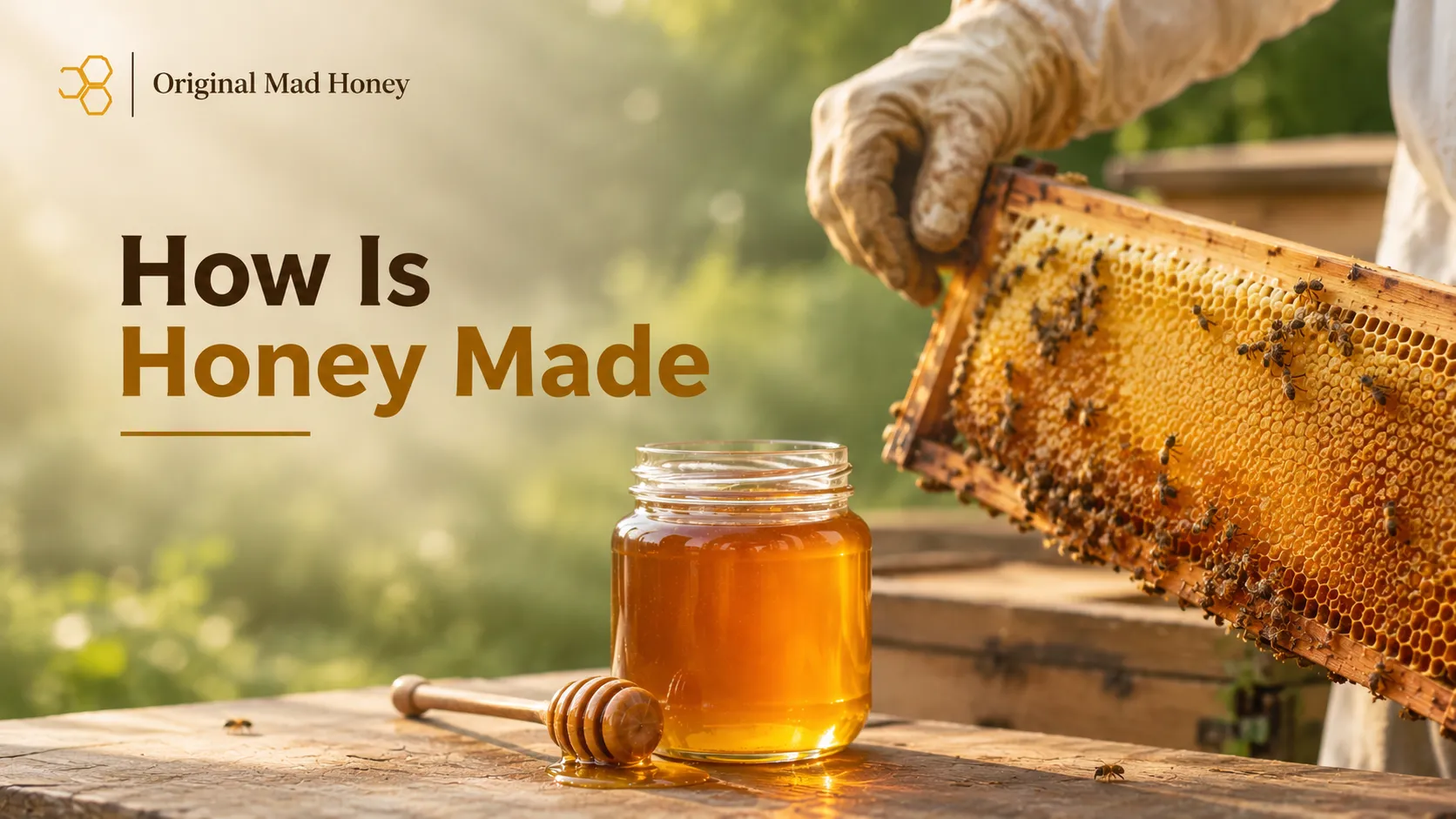
Honey is made by bees. Foragers collect flower nectar, house bees add enzymes and dry it in the hive, and the finished honey is sealed in wax. Beekeepers then spin