

How Long Does Honey Last? Shelf Life, Storage Tips, and Signs of Spoilage
Honey that is sealed, dry and clean can last for years, and well kept pure honey can stay usable long after the date printed on the jar. That is the
Mad honey doesn’t come from a farm, a factory, or a managed apiary. It comes from a narrow, specific set of natural conditions that exist in only a handful of places on Earth, and every one of those conditions has to line up at once for the honey to exist at all. Here’s exactly where it originates, what has to be true geographically and biologically for it to happen, and why that combination can’t simply be recreated somewhere new.
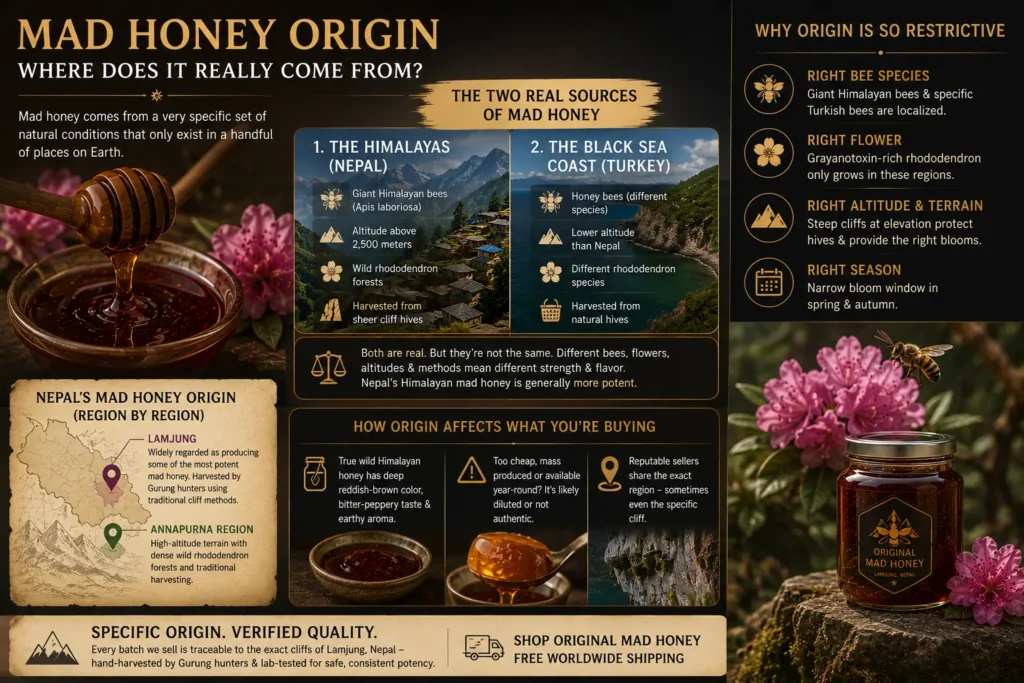
Authentic mad honey is produced in only two regions in the world: the mid-hill Himalayas of central Nepal and the Black Sea coast of northeastern Turkey. Both regions share the same underlying cause, bees foraging on rhododendron nectar containing grayanotoxin, but the details differ enough that the two honeys aren’t interchangeable. Nepal’s mad honey comes from wild colonies of the giant Himalayan honey bee, Apis laboriosa, nesting on cliffs above 2,500 meters. Turkey’s comes from domesticated honey bee hives kept near lower-altitude rhododendron groves. Origin isn’t a marketing detail here. It’s the entire reason mad honey is rare, since the specific bee, the specific flower, the altitude, and the narrow bloom season all have to occur together, and that combination simply doesn’t exist anywhere else on the planet.
Nepal’s mad honey is harvested from wild cliffs at altitudes generally above 2,500 meters, concentrated in the mid-hill districts of central Nepal, including Lamjung, Kaski, Gorkha, and the wider Annapurna region. This is where the giant Himalayan honey bee, Apis laboriosa, the largest honey bee species in the world, builds its exposed, single-comb hives on the underside of sheer rock overhangs. The bee has never been domesticated, and its nesting requirements are specific enough that the honey can only ever be gathered where the wild colonies actually choose to build.
Turkey’s mad honey, known locally as deli bal, is produced along the country’s northeastern Black Sea coast, in provinces including Rize, Trabzon, and Artvin. Here, a related but genetically distinct rhododendron species grows at lower altitudes than Nepal’s, and the honey is made by ordinary domesticated honey bees kept in managed hives placed near the rhododendron groves rather than by a wild cliff-nesting species.
Both are legitimate sources of mad honey, but they aren’t interchangeable. The bee species, the altitude, the rhododendron species, and the harvesting method are all different, which is exactly why the two honeys differ noticeably in strength and flavor. Nepal’s Himalayan mad honey is generally considered the more potent and more traditionally harvested of the two, largely because it still depends entirely on wild hives and manual cliff climbing rather than any form of apiary management.
Neither origin works without the right plant. Nepal alone is home to roughly 30 to 33 documented rhododendron species, ranging from the country’s national flower, Rhododendron arboreum, known locally as Lali Gurans, up through high-altitude alpine species like Rhododendron campanulatum and Rhododendron anthopogon. Rhododendron arboreum itself grows across a wide altitude band, generally cited between about 1,200 and 3,600 meters depending on the source, with its most vivid, deep red blooms concentrated in the mid-hills and paler, almost white blooms appearing at higher elevations.
Not every rhododendron species produces honey with meaningful grayanotoxin content, and not every region where rhododendron grows produces mad honey at commercially significant volume. The mad honey specifically associated with Nepal tends to come from the country’s central and eastern high hills, where dense rhododendron forest coincides with cliff terrain that giant Himalayan bees can actually nest in. A peer-reviewed case report from rural Nepal has documented direct grayanotoxin poisoning from ingesting fresh rhododendron flowers themselves, not just the honey made from them, which underscores that the toxin is a property of the plant across its entire range, not something unique to a single valley or harvest.
Mad honey isn’t rare by design. It’s rare because its origin requires an unusual, very specific combination of factors that can’t be recreated elsewhere:
Remove any one of these, the bee, the flower, the altitude, or the season, and mad honey simply doesn’t happen. That’s the core reason it can’t be planted or replicated in a new location the way a conventional crop could be.
Within Nepal, not all mad honey comes from the same place, and the specific district matters more than most buyers realize.
For more detail on what makes this specific region stand out, see our guide to Himalayan mad honey.
Origin isn’t just a geography detail. It directly determines the honey’s strength, flavor, and authenticity.
Q: Where does the strongest mad honey come from?
A: Himalayan mad honey from Nepal, particularly the Lamjung and Annapurna regions, is generally considered the most potent, due to higher-altitude wild rhododendron and traditional harvesting methods.
Q: Is Turkish mad honey the same as Nepali mad honey?
A: No. They come from different bee species and different, though related, rhododendron species, at different altitudes, which gives each a distinct strength and flavor profile.
Q: Can mad honey be produced outside Nepal and Turkey?
A: Not authentically. It requires a very specific combination of wild bee species, rhododendron variety, altitude, and climate that doesn’t occur naturally anywhere else.
Q: How many rhododendron species actually grow in Nepal?
A: Nepal is home to roughly 30 to 33 documented rhododendron species, ranging from the widespread national flower, Rhododendron arboreum, to rarer high-alpine species found only above certain elevations.
Q: Why does origin matter when buying mad honey?
A: Origin determines both authenticity and potency. Honey without a clear, verifiable regional source is far more likely to be diluted or mislabeled.
Q: Is rhododendron itself dangerous, separate from the honey made from it?
A: Yes. All parts of the plant, including leaves, flowers, and nectar, contain grayanotoxins, and direct ingestion of the flowers has been documented to cause the same poisoning symptoms associated with mad honey.
Every batch of Original Mad Honey is traceable back to the exact cliffs of the Lamjung region in Nepal, not a general “Himalayan” label, harvested by Gurung honey hunters using traditional methods and lab-tested afterward for safe, consistent potency.
Honey that is sealed, dry and clean can last for years, and well kept pure honey can stay usable long after the date printed on the jar. That is the
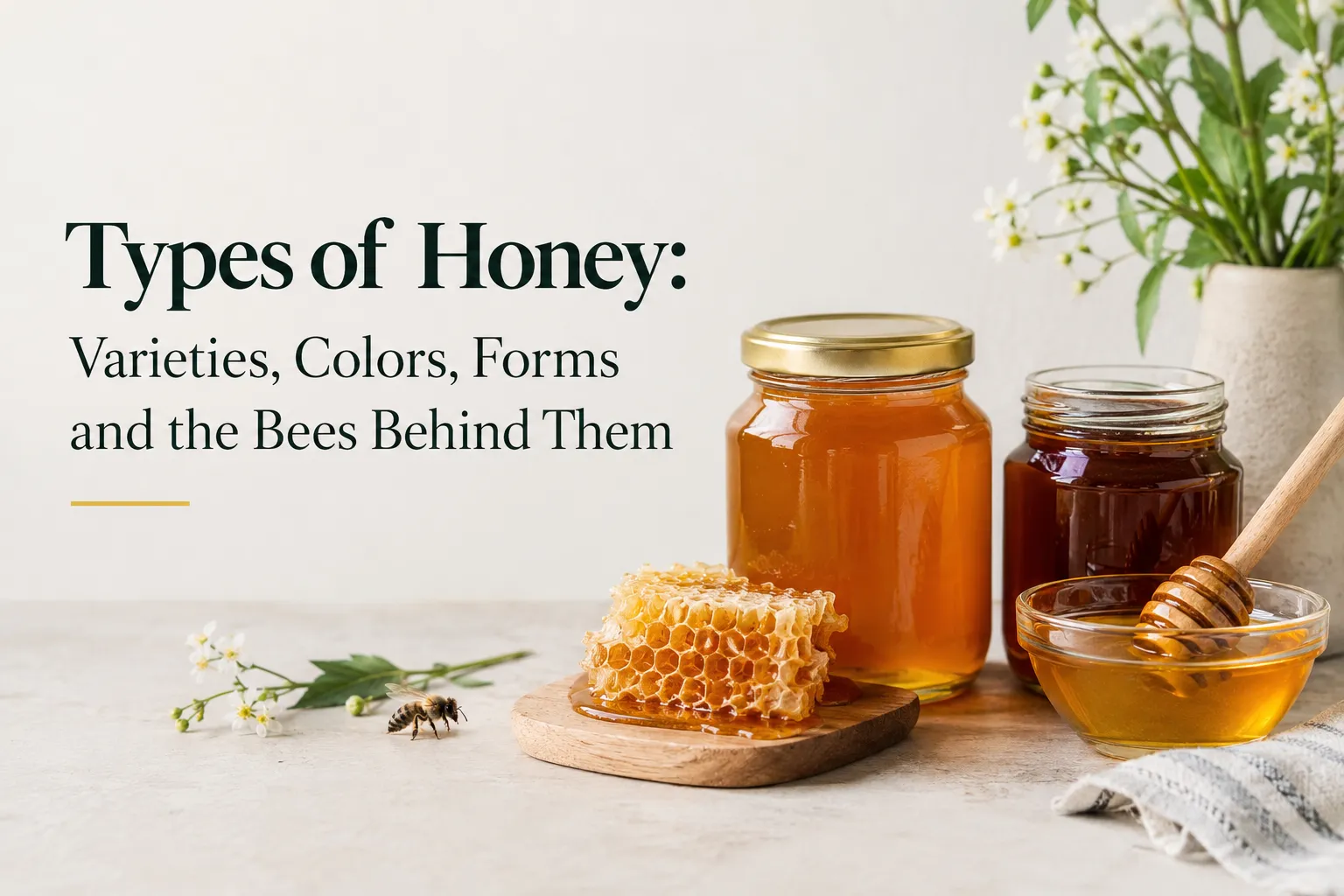
There are four ways to sort the types of honey: by the flower the bees visited, by color, by form such as raw or creamed, and by the species of
Honey benefits for men are real but modest. The best human evidence shows that honey can lower fasting blood sugar and cholesterol when it replaces other sugar, and that it