
There is a particular kind of hesitation that hits people right before they buy their first jar of mad honey. You have read about the effects, you have seen the warnings about grayanotoxin, and somewhere in the back of your mind is a nagging thought: is mad honey legal where I actually live? It is a reasonable question to sit with for a moment before you check out, and if you search for it, you will find a lot of vague answers scattered across forums, Reddit threads and half finished blog posts.
Here is the honest, straightforward version. Mad honey is legal in the overwhelming majority of countries and cities in the world, including the United States, Texas, California, the United Kingdom, Canada, Malaysia, most of Europe and dozens of other places we will walk through below. It is classified as a specialty food, the same broad category as manuka honey or truffle honey, not as a controlled substance. What actually changes from one place to another is not whether you are breaking a law by owning it, but how strict the customs and biosecurity checks are once your parcel lands at the border.
We source and ship authentic Himalayan mad honey directly from Nepal at Original Mad Honey, so this question comes up in our messages almost every single day, from a first time buyer in Dallas to someone in Kuala Lumpur asking if it will actually clear customs. This guide brings together the actual laws, the history behind the honey, and a full breakdown by country and, where it matters, by state and city.
What Is Mad Honey?
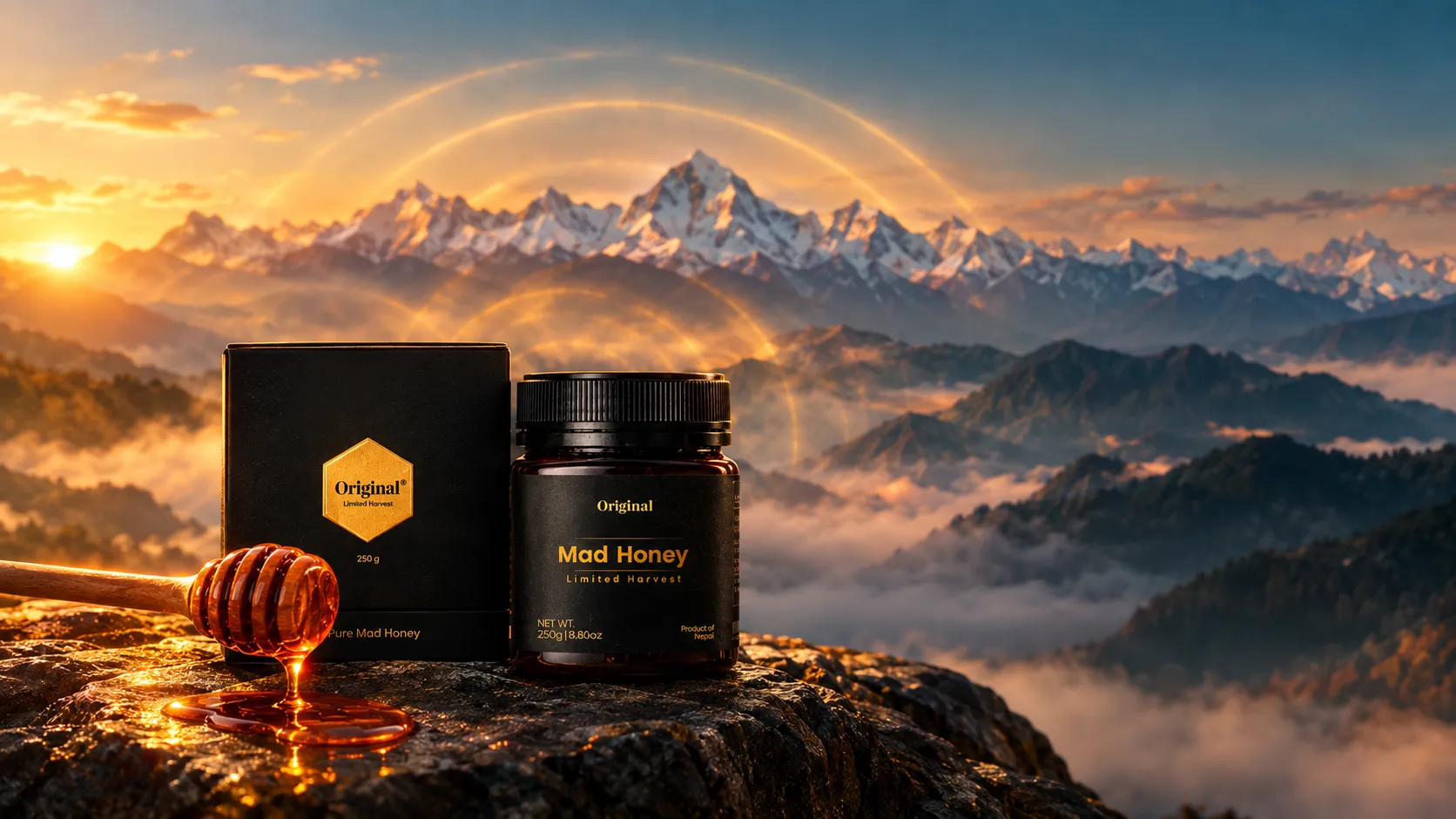
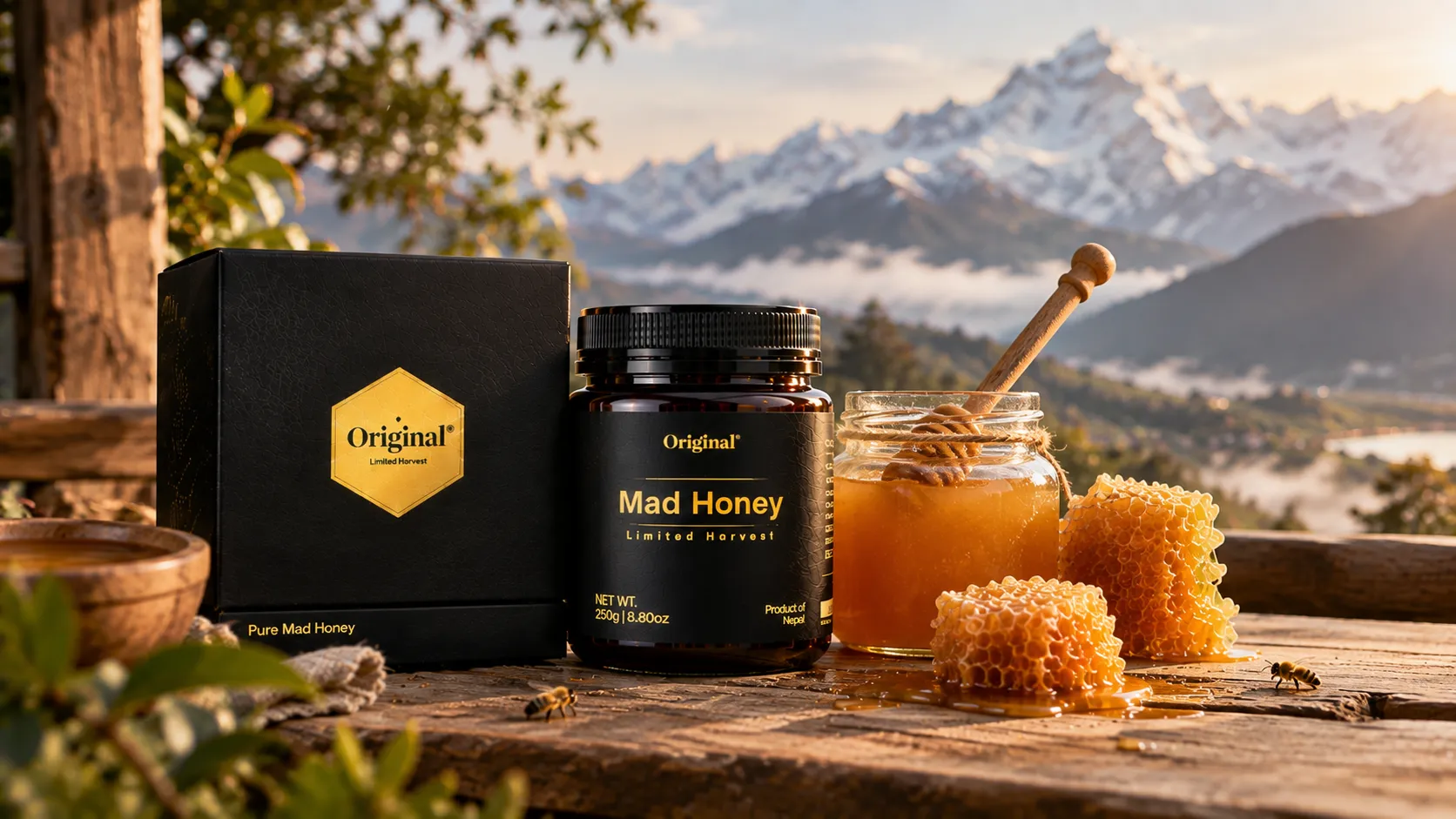
Mad honey, called deli bal in Turkey and sometimes red honey or cliff honey elsewhere, is a rare, naturally occurring honey produced by giant Himalayan honeybees that forage on wild rhododendron flowers in the mountains of Nepal and along Turkey’s Black Sea coast. What sets it apart from a regular jar on a supermarket shelf is grayanotoxin, a naturally occurring compound that carries through from the rhododendron nectar into the finished honey and gives it its distinct warming, mildly euphoric effect.
We cover the full story behind the bees, the specific rhododendron species involved and how the honey is harvested in detail on our dedicated page: What Is Mad Honey. For this guide, the part that matters most is simply that mad honey is a food product with a naturally occurring compound in it, not a manufactured drug, and that single fact shapes almost everything about its legal status around the world.
A Short History Worth Knowing
Long before anyone understood the chemistry, people understood the effects. The earliest known record comes from 401 BCE, when the Greek soldier and historian Xenophon described his troops raiding wild beehives while retreating through the Pontus region on the Black Sea coast. His men ate the honey and were soon disoriented, vomiting and unable to stand, though almost all of them recovered within a day.
The most dramatic chapter came in 67 BCE. King Mithridates VI of Pontus, remembered by historians as the Poison King for his obsession with toxins and antidotes, is said to have left jars of mad honey along a retreat route he knew the pursuing Roman army under Pompey would cross. When Pompey’s soldiers found and ate it, roughly a thousand of them were left too weak to fight, and Mithridates’s forces returned to finish the ambush, an early recorded example of a natural substance used deliberately as a weapon.
Away from the battlefield, its history is far gentler. Gurung communities in Nepal and beekeepers along Turkey’s Black Sea coast have passed mad honey down for generations as a folk remedy for high blood pressure, digestive complaints and fatigue, long before grayanotoxin had a name.
The Compound Behind the Question: Grayanotoxin
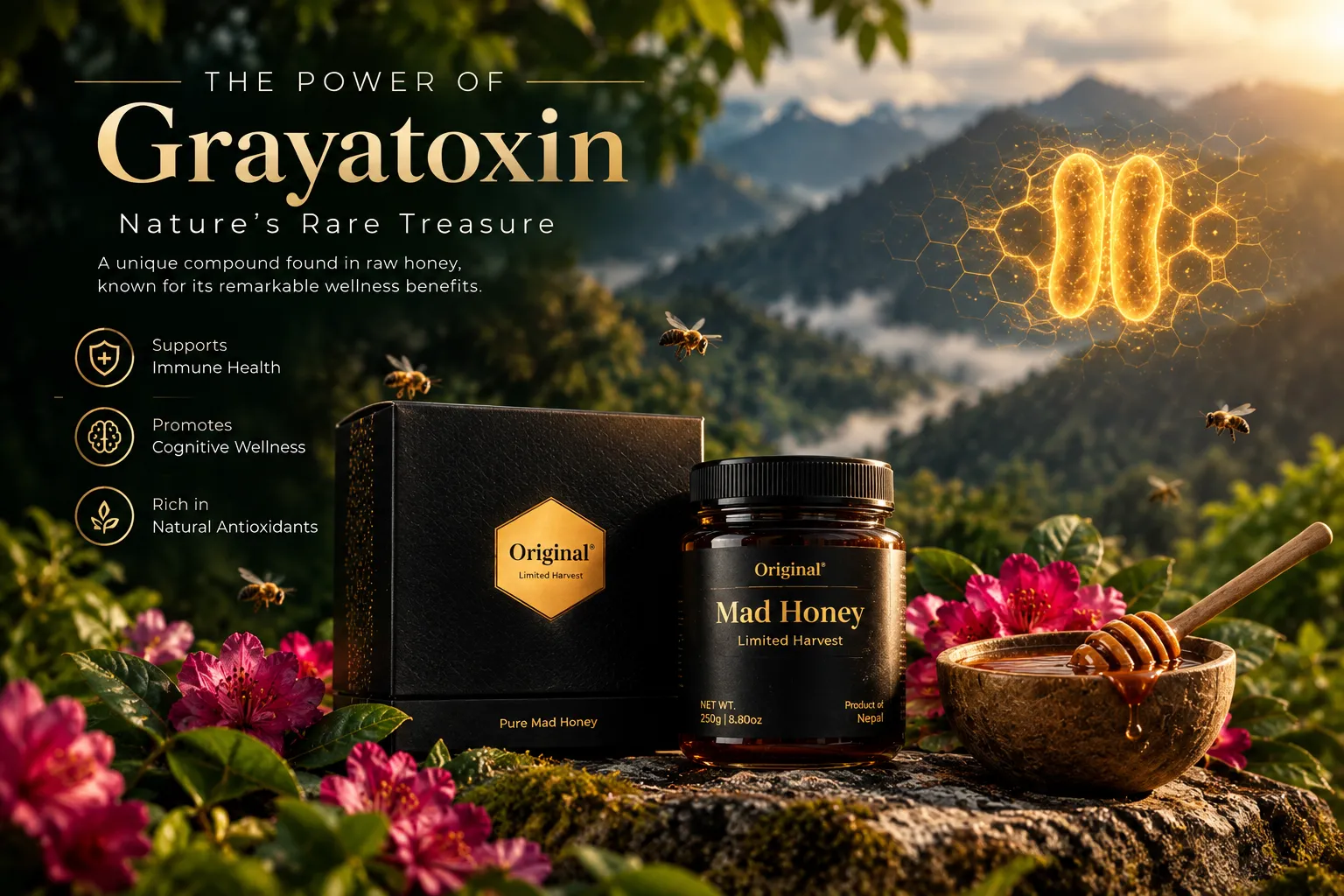
Almost every legal question about mad honey eventually traces back to one compound. Grayanotoxins are a family of neurotoxic diterpenoids found in certain rhododendron species, and researchers have identified more than a dozen variants, with grayanotoxin I and grayanotoxin III being the two most responsible for the effects associated with mad honey.
Instead of blocking nerve signals the way many toxins do, grayanotoxin binds to voltage gated sodium channels in nerve and muscle cells and holds them open longer than normal. That prolonged activity produces the tingling, warmth and mild euphoria people report, and at higher doses, the drop in heart rate and blood pressure the honey is known for.
Here is the single fact that decides this entire topic. Grayanotoxin has never been placed on a controlled substances schedule anywhere in the world. It does not appear on the United States DEA’s schedules, it has no listing under the UK’s Misuse of Drugs Act, and the European Food Safety Authority, Health Canada, and Food Standards Australia New Zealand all treat it the same way, as a naturally occurring plant compound found in a food, not a scheduled drug. Because of that, mad honey is regulated everywhere as honey, under food law, not as a narcotic under drug law.
Food Law vs Drug Law: Why This Distinction Decides Everything
Two entirely separate legal systems could theoretically apply to mad honey, and understanding why only one actually does explains the whole picture.
Controlled substance law governs drugs like cannabis, opioids and psychedelics through formal scheduling, enforced in most countries by a dedicated drug agency. A substance only falls under this system once a regulator has specifically scheduled it, and grayanotoxin never has been.
Food safety law governs everything sold as food, and this is the system mad honey actually falls under, the same one that governs a carton of eggs or a bag of spinach. In the United States, this comes down to Section 402 of the Federal Food, Drug and Cosmetic Act, which draws a distinction between a food that is adulterated because of an added poisonous substance, and one that contains a naturally occurring poisonous substance, only considered adulterated if the quantity present would ordinarily cause harm. Grayanotoxin falls into the second, more lenient category, since it occurs naturally rather than being added, which is part of why no regulator has ever issued a blanket ban on the product category.
Is Mad Honey Legal in the USA?
Yes, in all fifty states. There is no federal law and no state law anywhere in the country that names mad honey or grayanotoxin as a banned substance. The FDA regulates it as a food under the Federal Food, Drug and Cosmetic Act, and because grayanotoxin occurs naturally rather than being an added ingredient, the legal bar for restricting it is far higher than it would be for a synthetic contaminant. Commercial shipments do need to meet FDA food facility registration and Prior Notice requirements, and sellers cannot legally make disease treatment claims about the honey, but none of that changes the position of someone placing a personal order.
For the full breakdown, including drug test questions, flying with mad honey and more dosage guidance, read our detailed guide: Is Mad Honey Legal in the USA.
Is Mad Honey Legal in Texas?
Yes. Texas has no state specific law restricting the purchase, possession or consumption of mad honey. The Texas Department of State Health Services oversees food safety in the state, and mad honey is not subject to anything beyond the standard food safety rules that apply to every other honey product. Residents of Dallas, Houston, Austin and San Antonio can order and receive it without any legal concern.
Is Mad Honey Legal in California?
Yes. This is worth calling out specifically because California is known for having some of the strictest food and supplement regulations in the country. The state’s Food and Agricultural Code governs honey production and sale, but it does not contain any provision that targets or restricts mad honey, and it does not fall under any restricted category under California law. Buyers in Los Angeles, San Francisco and San Diego can order it the same way any other specialty food is ordered.
Mad honey carries the same legal standing across the rest of the country too, including New York, Florida, Illinois, Pennsylvania, Ohio, Georgia, Michigan, North Carolina and every other state, with no state legislature having enacted a law specifically naming or restricting it.
Is Mad Honey Legal in the UK?
Yes, across England, Scotland, Wales and Northern Ireland. It falls entirely outside the Misuse of Drugs Act 1971 and the Psychoactive Substances Act 2016, since grayanotoxin has no scheduling under UK drug law. Where UK rules do apply is honey specific food law. Honey is a legally defined product category in the UK, with requirements around labeling, origin and composition, and any seller marketing mad honey with medical claims risks attention from Trading Standards or the MHRA. For personal orders, parcels properly labeled as honey generally clear UK Border Force without difficulty.
Our dedicated guide covers UK customs and labeling detail in full: Is Mad Honey Legal in the UK.
Is Mad Honey Legal in Canada?
Yes. Grayanotoxin does not appear on any schedule under the Controlled Drugs and Substances Act, so buying and eating mad honey carries no criminal liability. The Canadian Food Inspection Agency treats it as an imported food product, which means labeling accuracy, certificates of origin and standard food safety documentation matter for anything crossing the border commercially. Canada applies relatively strict scrutiny to health claims made about food products, so reputable sellers avoid presenting mad honey as anything other than a specialty food. Buyers in Toronto, Vancouver, Montreal and every other Canadian province and city can order from a transparent, lab tested seller with confidence.
Is Mad Honey Legal in Malaysia?
Yes, mad honey is legal in Malaysia as a natural food product, falling under guidelines set by the Malaysia Quarantine and Inspection Services and the Food Safety and Quality Division, both of which regulate it the same way they regulate any imported specialty honey. There is no separate law targeting mad honey by name, and buyers in Kuala Lumpur, Penang, Johor and across the country can order it for personal use without legal concern, provided the product is accurately labeled and used responsibly.
Read our full Malaysia specific breakdown here: Is Mad Honey Legal in Malaysia.
Is Mad Honey Legal in Australia?
This is the one major market where the answer genuinely needs a caveat, and it has nothing to do with drug law. Australia does not classify grayanotoxin as a controlled substance, so owning or eating mad honey carries no criminal penalty at all. The real obstacle is Australia’s biosecurity system. The Department of Agriculture, Fisheries and Forestry runs some of the strictest import inspections on bee products anywhere in the world, since honey can carry pests and diseases the country works hard to keep out of its own bee population. Every jar entering Australia, mad honey included, is subject to inspection, and shipments that fail biosecurity checks can be destroyed or returned to the sender at their own cost. So mad honey is legal in Australia in the strict sense, but getting a jar through customs is the part that takes planning, whether you are in Sydney, Melbourne, Brisbane or Perth.
Our Australian guide explains what documentation genuinely helps a shipment clear inspection: Is Mad Honey Legal in Australia.
Is Mad Honey Legal in India?
Yes. Mad honey is legal to buy and possess in India, and no law names it specifically. It falls under the general food safety framework overseen by the Food Safety and Standards Authority of India, the same body that regulates every other honey product sold in the country. Parts of the Indian Himalayas, particularly in the northeast and areas bordering Nepal, have their own traditions around wild cliff honey, so mad honey is far from an unfamiliar product to Indian regulators or consumers.
We go into more regional detail, including how to tell authentic Himalayan mad honey apart from diluted local imitations, here: Mad Honey in India.
Is Mad Honey Legal in Europe?
Yes, across essentially the entire European Union and European Economic Area. Honey sold within the EU is governed by the EU Honey Directive, Council Directive 2001/110/EC, and the General Food Law Regulation, EC No. 178/2002, and mad honey qualifies under these rules the same way any other honey does, provided it is labeled correctly. Germany regulates it under the German Food and Feed Code, France monitors health claims closely through the DGCCRF, and the Netherlands, Spain, Italy, Poland, Sweden and Ireland all treat it as a specialty honey product without additional restriction. The EU’s Novel Foods Regulation, which requires special approval for foods without a documented history of consumption before 1997, has not been applied to mad honey specifically, since honey itself has an obvious, centuries long consumption history across Europe.
Is Mad Honey Legal in the UAE and the Wider Middle East?
Yes, mad honey can be legally bought and consumed in the UAE, Saudi Arabia, Qatar, Bahrain, Oman and Kuwait as a natural food item. In the UAE specifically, honey products fall under the Emirates Conformity Assessment Scheme, administered by the Ministry of Industry and Advanced Technology, which sets quality and labeling standards for anything entering the country as honey. Since mad honey contains no alcohol or animal derived additives, it is naturally compatible with Halal dietary requirements, though commercial distributors may still be asked to provide formal Halal certification. Buyers in Dubai, Abu Dhabi, Sharjah and beyond can order with the same confidence as customers anywhere else in the region.
Is Mad Honey Legal in Nepal and Turkey, the Source Countries?
In both countries where mad honey actually originates, it is a completely normal, culturally established product rather than anything exotic or restricted. In Nepal, cliff harvesting by Gurung honey hunters is a centuries old tradition passed down through families, and the honey is sold openly in local markets as well as exported worldwide. In Turkey, deli bal is produced and sold by beekeepers along the Black Sea coast and remains a recognized regional specialty rather than a controlled item.
Is Mad Honey Legal in Japan, Singapore and South Korea?
All three allow mad honey under their standard food import frameworks. Japan’s Ministry of Health, Labour and Welfare requires it to pass the same customs inspection and food safety standards as any imported honey. Singapore’s Food Agency requires commercial importers to register and obtain the relevant licensing, though personal quantity orders generally move through without complication. South Korea permits it under its general food import regulations as well, though buyers should always confirm current rules before ordering in bulk, since food import policy can shift.
Is Mad Honey Legal in China and the Rest of Southeast Asia?
Generally yes, subject to the same food safety laws that apply to any imported specialty food. As demand grows across the region, some countries have begun paying closer attention to labeling accuracy for honey products claiming psychoactive or medicinal effects, so accurate, non exaggerated labeling matters more here than in most other markets.
Is Mad Honey Legal in South Africa and the Rest of Africa?
Yes, mad honey is legal to sell and consume across most African countries. In South Africa specifically, it falls under the Agricultural Product Standards Act, which regulates the grading, packaging and labeling of honey and other bee products, whether produced locally or imported.
Is Mad Honey Legal in South America and Mexico?
Mad honey is legal in most South American countries, including Argentina, Chile and Colombia, under their respective food safety frameworks. Brazil is the notable exception worth flagging, since Brazilian regulators apply additional restriction to products containing grayanotoxin, meaning shipments there can face closer scrutiny or be refused entirely. Mexico permits it under its NOM food safety standards.
Is Mad Honey Legal in New Zealand?
New Zealand’s situation closely mirrors Australia’s. Mad honey is not classified as an illegal substance and carries no criminal penalty to own or consume, but New Zealand’s biosecurity protections for its bee industry are extremely strict, and imported honey products face thorough inspection. The practical result is the same as in Australia, legal to own, but a shipment can still be delayed or turned back if it does not meet biosecurity requirements.
Import and Customs: The Part That Actually Matters
Across almost every country covered above, the legal status of mad honey is rarely the real sticking point. The sticking point is whether a parcel clears customs smoothly, and that comes down to a handful of practical details any buyer can check before ordering.
Labeling has to be accurate. A jar should clearly state that the contents are honey, list the country of origin, the net weight and the producer’s details. Vague or missing labeling is the single biggest reason a shipment gets flagged for extra inspection anywhere in the world.
Documentation helps enormously, especially for buyers in stricter markets like Australia, New Zealand or Brazil. A reputable seller provides a certificate of origin, export paperwork from Nepal, and a lab report showing the honey’s composition, including its grayanotoxin content. This is exactly why Original Mad Honey includes batch specific lab testing and harvest dates with every jar we ship. You can view our current lab reports here.
How the product is described on customs paperwork matters too. Mad honey should always be declared simply as honey, never as a psychoactive substance or hallucinogenic product, because an inaccurate description is what actually invites the kind of scrutiny it does not legally need. Shipping method plays a role as well, since courier services with dedicated food customs brokerage tend to clear food shipments faster and with fewer surprises than unregulated freight forwarders.
Traditional Uses and Why People Buy Mad Honey
Long before mad honey became a curiosity for wellness minded buyers around the world, it held a genuine place in traditional medicine across Nepal and Turkey. Gurung communities have used it as a folk remedy for high blood pressure, digestive discomfort and general fatigue, and Turkish beekeepers along the Black Sea have passed down similar uses for generations. Some traditional use also includes it as a topical wound treatment, drawing on honey’s naturally antibacterial properties more broadly.
It is worth being clear that these are traditional and user reported uses rather than medical claims. Mad honey is sold as a specialty food product, not a medicine, and it has not been evaluated or approved for treating any condition. Anyone with an existing health condition should speak to a doctor before trying it, regardless of what has traditionally been said about it.
Dosage and Safety Guidelines
Since grayanotoxin is a naturally occurring compound rather than a regulated food additive, no government has set a universal numeric safety limit for it. That places the responsibility for safe use on sourcing and dosage rather than on any official safety label, which is exactly why understanding the right amount matters more with mad honey than with an ordinary jar of honey.
As a general starting point, most first time users begin with around half a teaspoon on an empty stomach, in a calm, safe setting, without mixing it with alcohol. Experienced users sometimes work up to a full teaspoon, and it is rarely recommended to exceed roughly two teaspoons in one sitting. Effects typically begin within thirty minutes to an hour and can last for a few hours depending on individual sensitivity and dose.
Certain groups should avoid mad honey altogether. This includes pregnant or breastfeeding women, anyone with a heart condition, anyone with low blood pressure, and anyone taking blood pressure or cardiac medication. If someone does consume too much, symptoms such as dizziness, nausea, vomiting and a slowed heart rate are almost always self limiting and resolve within a day with rest and hydration, though severe symptoms should always prompt medical attention.
How to Buy Authentic Mad Honey Legally
Since mad honey is lightly regulated at the retail level in most countries, the real risk most buyers face is not a legal one. It is ending up with a diluted, mislabeled or counterfeit jar from a seller who is not transparent about where the honey actually came from. A trustworthy seller will always be upfront about a few specific things: the exact region in Nepal the honey was harvested from, batch specific lab testing for grayanotoxin content, a harvest date printed on the jar, and clear dosage instructions included with every order.
At Original Mad Honey, every batch we sell is sourced directly from cliff harvesters in Nepal, lab tested for purity and grayanotoxin content, and shipped with the documentation needed for smooth customs clearance in most countries covered in this guide. You can browse our current harvest on the shop page.
Frequently Asked Questions
Is mad honey legal?
Yes, in the vast majority of countries and cities worldwide, including the United States, the United Kingdom, Canada, most of Europe, Malaysia, India and Australia. It is classified as a food product, not a controlled substance.
Is mad honey legal in the USA and in states like Texas or California?
Yes. It is legal in all fifty states, with no federal or state law banning it, and Texas and California both treat it as an ordinary specialty food product with no additional restriction.
Is mad honey a controlled substance anywhere in the world?
No. Grayanotoxin has never been placed on a controlled substances schedule by any national government. Mad honey is regulated as a food everywhere it is sold.
Can mad honey be shipped internationally without legal issues?
In most countries, yes, provided it is declared honestly as honey and properly labeled. Countries with strict biosecurity systems, mainly Australia and New Zealand, apply more thorough inspection, which can slow a shipment down without making it illegal.
Will mad honey show up on a drug test?
No. Standard drug panels test for substances like THC, opioids, cocaine and amphetamines. Grayanotoxin is not included in any standard testing panel.
Is mad honey legal to bring on a flight?
As a food item, it can be packed in checked luggage without restriction. In carry on luggage, it follows the same liquid rule as any other gel or liquid food, meaning containers over 100ml are generally not permitted through security.
Why do some countries seem stricter than others if mad honey is legal everywhere?
Because the strictness usually comes from general food import and biosecurity rules rather than anything specific to mad honey. Countries like Australia and New Zealand apply the same intense scrutiny to all imported bee products, mad honey included, regardless of its legal status.
Does buying mad honey online carry any legal risk for the buyer?
For personal use, essentially none in the countries covered in this guide. The bigger practical risk is quality rather than legality, since the market includes sellers offering diluted or inaccurately labeled products.
Final Word
Wherever you are reading this from, whether that is Texas, London, Toronto, Kuala Lumpur, Sydney or somewhere else entirely, the answer to is mad honey legal is almost certainly yes. It is treated as a specialty food, not a drug, across the United States, the United Kingdom, Canada, the European Union, the UAE, India, Malaysia and the vast majority of countries worldwide. Australia and New Zealand are the two markets where biosecurity inspection, not the law itself, is the real hurdle, and Brazil is worth a second look for South American buyers.
What actually protects you as a buyer is not the legal status alone, it is choosing a seller who is transparent about sourcing, lab testing and dosage. That is the standard we hold ourselves to at Original Mad Honey, and it is why customers across dozens of countries are able to order with confidence.
References
- U.S. Food and Drug Administration, Federal Food, Drug and Cosmetic Act
- U.S. Drug Enforcement Administration, Controlled Substances Schedules
- UK Food Standards Agency, Honey Regulations
- Canadian Food Inspection Agency, Importing Food Products
- Australian Department of Agriculture, Fisheries and Forestry, Biosecurity Import Conditions
- European Food Safety Authority
- UAE Ministry of Industry and Advanced Technology, ECAS Standards
- Food Safety and Standards Authority of India
- National Center for Biotechnology Information, Mad Honey Poisoning Case Studies
- Wikipedia, Mad Honey
- Xenophon, Anabasis, circa 370 BCE, historical documentation of mad honey in ancient warfare
- EU Honey Directive, Council Directive 2001/110/EC
- EU General Food Law, Regulation EC No. 178/2002
This article is for general informational purposes only and is not legal advice. Import rules and food regulations can change, so always check current customs guidance for your own country before ordering. Consume mad honey responsibly and consult a doctor before trying it if you have any underlying health condition.