

How Long Does Honey Last? Shelf Life, Storage Tips, and Signs of Spoilage
Honey that is sealed, dry and clean can last for years, and well kept pure honey can stay usable long after the date printed on the jar. That is the
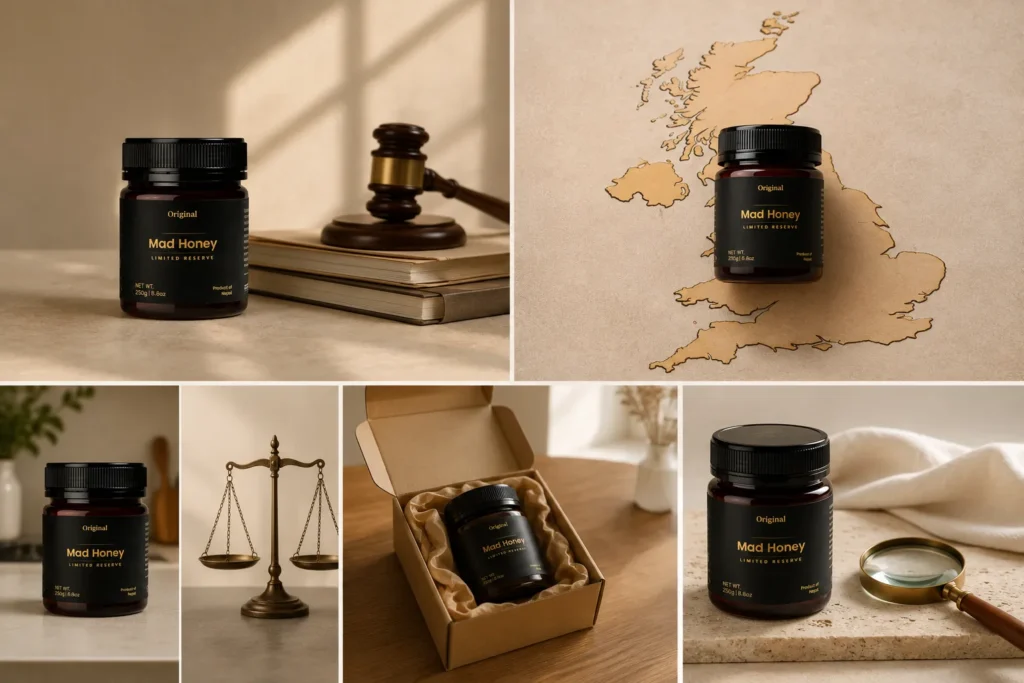
Search “is mad honey legal in UK” and you’ll find a lot of confident-sounding, contradictory answers — some sites claim it’s an outright controlled substance, others say it’s completely unregulated. Neither is accurate. The real answer requires separating three different UK legal frameworks that people tend to lump together: drug law, food law, and advertising law. Here’s what actually applies, in plain terms.
Yes, mad honey is legal to buy, possess, and consume in the UK. It is treated as a food product, not a controlled substance. The legal friction points that do exist in the UK aren’t about possession — they’re about how mad honey is imported commercially, labelled, and marketed.
No. This is the most common misconception, so it’s worth being precise about it.
The UK’s Misuse of Drugs Act 1971 regulates substances by listing them in Class A, B, or C schedules — heroin, cocaine, cannabis, and various synthetic drugs fall under this Act. Grayanotoxin, the naturally occurring compound in mad honey, is not listed anywhere in these schedules.
The other law people sometimes point to is the Psychoactive Substances Act 2016, which bans producing, supplying, or possessing “novel psychoactive substances” (NPS) with intent to supply. On paper, this law is broad enough that some commentators have speculated it could apply to grayanotoxin. In practice, the Act was written to target synthetic “legal high” compounds, and grayanotoxin — a naturally occurring plant-derived toxin present in an ordinary food product — is not named in it and is not treated by UK enforcement as falling under it. The NHS has also characterized mad honey’s adverse effects as a form of food poisoning rather than a drug-related harm, reinforcing that this sits under food safety, not drug enforcement.
Because mad honey isn’t a scheduled drug, it falls under the Food Standards Agency (FSA), which oversees food safety and labelling across England, Scotland, Wales, and Northern Ireland. Under FSA rules, honey is a legally defined product category with compositional standards — meaning sellers can’t just call anything “honey” and sell it without meeting food safety expectations.
This creates two areas of genuine legal relevance for anyone buying or selling mad honey in the UK:
Personal-quantity imports (a jar or two for your own use) typically clear customs without issue, provided they’re accurately labelled as a food product. Larger or commercial shipments face more scrutiny and may need to meet Novel Food or traditional food from a third country notification requirements, since mad honey doesn’t have a long history of being sold commercially within the UK the way ordinary honey does.
This is where most of the real legal risk sits — not for buyers, but for sellers. The Advertising Standards Authority (ASA) and its CAP Code prohibit food products from making disease treatment or prevention claims. Describing mad honey as a “libido booster,” a treatment for high or low blood pressure, or any other medicinal-sounding claim crosses directly into territory the ASA and MHRA actively police, regardless of whether the underlying product itself is legal to sell.
If you’re a UK-based buyer, the practical legal picture is simple: personal possession and consumption of mad honey is not something UK authorities treat as a legal issue. Your main considerations are:
If you’re a UK-based seller or considering importing commercially, the compliance checklist looks different from the buyer’s:
Has anyone in the UK been prosecuted for buying or possessing mad honey?
No documented enforcement actions specifically targeting mad honey possession exist. UK regulatory attention in this space has focused on food-safety and advertising compliance for sellers, not buyers.
Is mad honey the same legal category as psychedelic mushrooms or other natural psychoactive substances in the UK?
No. Psilocybin mushrooms are explicitly scheduled under the Misuse of Drugs Act. Grayanotoxin is not scheduled under that Act or explicitly named under the Psychoactive Substances Act, which is the core legal distinction between the two.
Can mad honey be legally shipped to the UK from Nepal?
Personal-quantity shipments generally clear customs as a food import. Commercial shipments should be accompanied by proper food safety documentation and accurate labelling to avoid delays or holds at the border.
Does “legal” mean mad honey is safe in any amount?
No — legal status and safety are separate questions. Mad honey contains an active compound and should be used according to dosage guidance regardless of its legal status. See our full grayanotoxin explainer for details.
Mad honey legal status in the UK is genuinely simple once you separate drug law from food law: it is not a controlled substance, it is regulated as a food product, and the real compliance questions center on labelling and marketing claims rather than possession. If you’re buying for personal use, you’re not doing anything legally questionable. If you’re buying from a UK seller, the clearest sign of a compliant, trustworthy business is one that talks about mad honey the way food regulation requires — as a traditional food product with lab-verified content, not a miracle cure.
This article is for general informational purposes only and does not constitute legal advice. UK food and import regulations can change; sellers should verify current requirements directly with the Food Standards Agency (FSA) before commercial import or sale. Consult a healthcare provider before consuming mad honey, particularly if pregnant, breastfeeding, or managing a cardiovascular condition.
Honey that is sealed, dry and clean can last for years, and well kept pure honey can stay usable long after the date printed on the jar. That is the
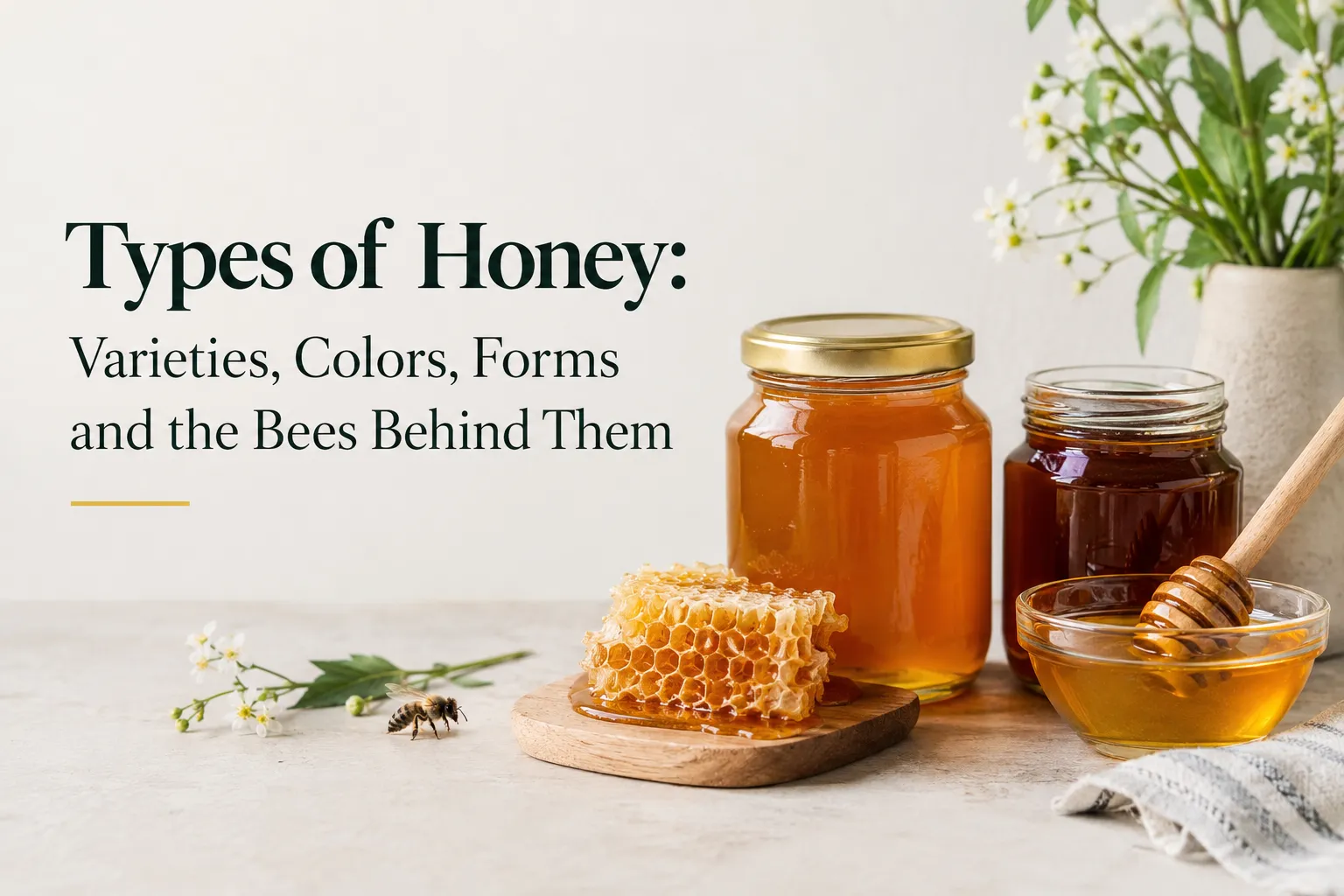
There are four ways to sort the types of honey: by the flower the bees visited, by color, by form such as raw or creamed, and by the species of
Honey benefits for men are real but modest. The best human evidence shows that honey can lower fasting blood sugar and cholesterol when it replaces other sugar, and that it