


How Long Does Honey Last? Shelf Life, Storage Tips, and Signs of Spoilage
Honey that is sealed, dry and clean can last for years, and well kept pure honey can stay usable long after the date printed on the jar. That is the
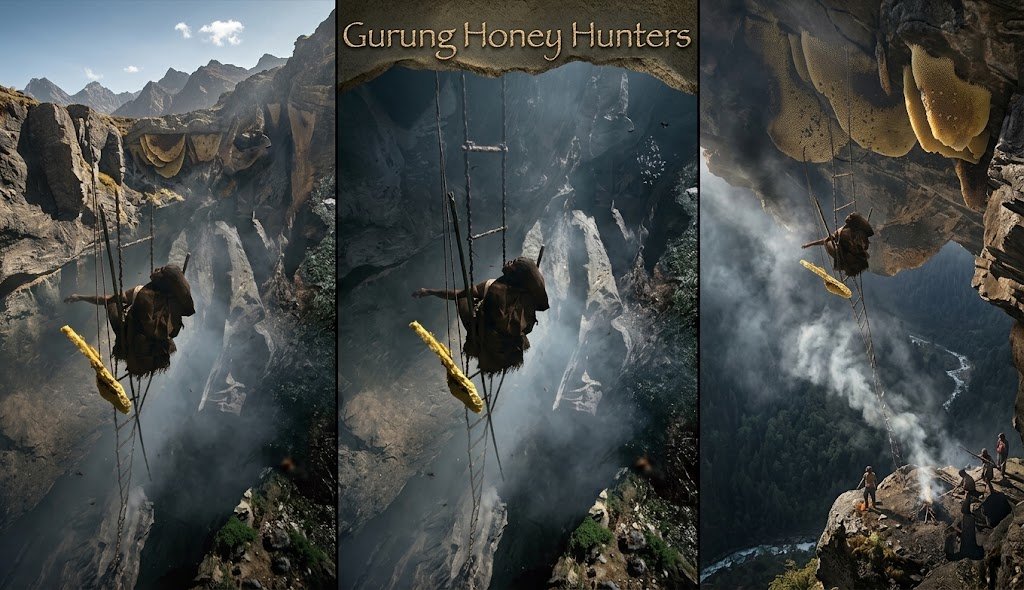
Honey hunters are people who collect honey from wild bee nests instead of from managed hives. In Nepal, the Gurung honey hunters climb down steep cliffs on handmade bamboo ladders, calm the bees with smoke, and cut honeycomb from the nests of the world’s largest honey bee, the Himalayan giant honey bee (Apis laboriosa). They hunt twice a year, in spring and in autumn, and the spring honey from rhododendron flowers is the honey the world calls mad honey.
Original Mad Honey is harvested by Gurung honey hunters in Lamjung, Nepal, so we have a commercial interest in this tradition. This guide explains who the hunters are, how a hunt works, what the ritual means, and what threatens the practice, including the parts that are uncomfortable for anyone who sells the honey.
Honey hunters collect wild honey from nests that bees build in trees, caves, and cliffs. People hunt honey in several parts of Asia, and the bee they hunt changes with the place. According to a 2022 report by Dialogue Earth and The Third Pole, people in India, Yunnan province in China, Myanmar, Laos, and Vietnam mostly hunt the honey of the lowland giant honey bee (Apis dorsata). In Nepal, people hunt the honey of the Himalayan giant honey bee, which nests higher up on steep rock faces. That difference matters, because only the Himalayan species produces the red spring honey that carries the effects of rhododendron.
The Gurung are an ethnic community who live in the hills and mountains of central Nepal. Many Gurung villages sit on the slopes of the Annapurna and Lamjung Himalayas at about 1,000 to 2,000 meters, and the honey hunters come mostly from Lamjung, Kaski, and Gorkha. Other communities, such as the Magar, also hunt cliff honey in parts of Nepal, but ICIMOD’s Surendra Raj Joshi told reporters that the Gurung predominantly hunt the Himalayan giant honey bee.
Honey hunting is a group activity, and it is mostly a male one. Reports from villages say women tend not to take part because they handle household work, and that only a few men make the actual descent while others keep the fires burning, relay messages, and catch and carry the honey. An experienced hunter in Naiche village said he gives younger hunters low cliffs to practice on and climbs the high cliffs himself, so that the next generation learns the technique step by step.
Nepal honey hunters work in the hill districts of the Annapurna region. Tourism sources name these well known locations.
| District | Villages and areas named in sources | What the sources say |
|---|---|---|
| Lamjung | Ghalegaun, Ludi, Siurikhola, Ghanpokhara, Naiche | Gurung hunters carry out the spring and autumn hunts, and some villages host visitors |
| Kaski | Taprang, Ghachok, Ghandruk, Sikles | Kaski is known for honey hunting and mad honey harvesting, and a 2003 ICIMOD publication documents its cliff bees and hunters |
| Gorkha | Gurung villages in the hills | Honey hunting forms part of local culture and identity |
The Himalayan giant honey bee is the largest honey bee in the world, and workers grow to about 3 cm long. Colonies build large single combs under cliff overhangs, with a nest base of about 1.5 meters, and researchers have found the species as high as 4,200 meters above sea level, where no other honey bee lives. Wikipedia explains that the bee produces three kinds of honey: spring or red honey from flowers at higher altitudes, spring honey from flowers at mid and lower altitudes, and autumn honey from any site.
People do not keep this bee in hives. Every jar of cliff honey is wild harvested, and that is why supply is limited and why the hunters matter so much.
A honey hunt follows a pattern that families have passed on for generations, though details vary from village to village.
Hunters sometimes wear protective cloth on their heads, but they still get stung. Accounts describe cliffs of about 50 meters, and the ladders hang from the top with no modern climbing gear in the story. A hunt can also fail. In one 2022 hunt at Naiche, the comb they cut held less than 200 milliliters of honey, while the same nest had once yielded as much as 15 liters.
For the Gurung, honey hunting is a ritual before it is a trade. Accounts of the ceremony differ by village, but they share a pattern. Around ten to twelve men gather at the foot of the cliff with offerings of rice, flowers, and incense, and they ask the cliff god for permission and safe passage. In Naiche, the leader prayed to the water, earth, fire, wind, and snake gods, and he asked the bees to forgive the group for destroying their nests. Some accounts also describe an offering to Rangkemi, the guardian spirit of bees and dangerous places, and some mention an animal offering.
The tradition ties into village life with festival celebrations, and communities do not hunt during the Baishak Purnima festival. The Gurung belief that bees only nest on safe cliffs where gods live also shapes which cliffs people hunt. One nesting site near Naiche is never hunted because it is too hard to reach.
Honey hunters do not set out to make mad honey. They collect the honey the bees have made, and the flowers decide what the honey contains. Rhododendron forests grow across Nepal’s mid Himalayan belt, and the cliff bees feed on rhododendron flowers in spring. Rhododendron nectar carries grayanotoxin, and the toxin passes into the honey. Wikipedia describes mad honey as dark, reddish honey made from the nectar and pollen of rhododendron, with Nepal and Turkey as the main sources, and you can learn the basics of what is mad honey in plain words.
The steps of mad honey harvesting follow the flowering season, which is why the spring hunt matters most. The rhododendron flowers bloom from about March to May, and a weak bloom or a dry season can mean very little honey. The honey that results is the type people call Himalayan mad honey, or sometimes Himalayan red honey.
Reports describe cliff honey hunting as an ancient practice. The Gurung have hunted honey in the Himalayan foothills for centuries, and one ICIMOD specialist describes the practice as thousands of years old. For most of that time the honey served local needs, not export. A hunter from Naiche told The Third Pole that two decades earlier the wax was worth more than the honey, that people used the honey to make local alcohol or mixed it with tobacco, and that nobody wanted to buy it.
That changed as global demand for mad honey grew. The same hunter said the village honey sold for about 3.5 US dollars a liter twenty years earlier and about 20 dollars a liter by 2022, and that it is now one of the village’s main sources of income. A Nepal exporter told reporters that he ships three to four tonnes a year and that the amount is rising. The wider mad honey history shows how a local food became a global product in only a few decades.
Demand brought income, and it also brought risk. Scientists who study the species warn that it is in trouble.
These are reports from a small number of villages, and the situation differs from place to place. They still show why buying cliff honey is not only a matter of taste or price.
ICIMOD and bee scientists suggest practical steps:
One local official said that honey hunting supports tourism in the area and that the authorities want to keep the practice traditional. A bee scientist argued that honey harvesting should stop in favor of ecotourism. Reasonable people disagree, and communities should have a strong voice in the decision.
If you buy honey from Nepal, you can ask the seller questions that respect the hunters and protect you.
Original Mad Honey comes from cliff hives in Lamjung and is collected by Gurung honey hunters using traditional rope and bamboo methods. Each jar carries a batch number, and a QR code lets you check the batch origin and harvest date. You can compare the jars in our mad honey shop.
The honey that these hunters risk their lives for can also make you ill. Hospital reports describe dizziness, nausea, vomiting, a slow heart rate, and low blood pressure, and a case series from Nepal recorded poisoning after about one to two teaspoons of wild honey. Reports of mad honey side effects range from mild to serious. Avoid mad honey if you have heart disease, low blood pressure, or take heart or blood pressure medicine, if you are pregnant or breastfeeding, or if you are under 18. Call your local emergency number if you feel faint, notice a very slow pulse, or struggle to stay alert after eating it.
The Gurung are an ethnic community in the hills and mountains of central Nepal. Gurung men hunt wild honey from the nests of the Himalayan giant honey bee on steep cliffs, mainly in Lamjung, Kaski, and Gorkha.
A team builds a bamboo rope ladder, holds a ceremony, and lights a smoky fire to calm the bees. One or two hunters descend the cliff, cut the honeycomb with a long stick, and lower it in a basket to the team below.
They work on cliffs in the Annapurna region. Named locations include Ghalegaun, Ludi, Siurikhola, Ghanpokhara, and Naiche in Lamjung, and Taprang, Ghachok, Ghandruk, and Sikles in Kaski.
They hunt twice a year, in spring and in autumn. The spring honey from high altitude rhododendron flowers is the red honey linked to mad honey.
Yes. Hunters hang from handmade ladders on cliffs of tens of meters, they get stung, and they work without modern climbing gear.
The hunt begins with prayers and offerings to the cliff and nature deities, and hunters ask the bees for forgiveness. Honey hunting is also woven into village festivals and beliefs.
Reports from Gurung villages say that women tend not to take part, because they handle household work. Men carry out the descent and the support roles.
They learn from experienced hunters and move from low cliffs to higher ones as they gain skill. Villages pass the knowledge down through families.
The Gurung predominantly hunt the Himalayan giant honey bee, according to ICIMOD. Other communities, including the Magar, also hunt cliff honey in parts of Nepal.
Scientists report that it is declining in Nepal, with fewer colonies and fewer nesting cliffs, and they name pesticides, habitat loss, infrastructure, and destructive harvesting as causes.
https://dialogue.earth/en/food/nepal-honey-hunters-cling-to-traditions-as-bee-numbers-fall/ https://mountainresearchinitiative.org/blog/honey-hunting-an-age-old-tradition-meets-modern-threats/ https://www.beesforpeace.org/the-gurung-and-bees.html https://www.mountaindelights.com/blog/honey-hunting-in-nepal https://boldhimalaya.com/honey-hunting-tour-in-nepal/ https://link.springer.com/chapter/10.1007/978-981-10-8222-1_5 https://www.researchgate.net/publication/325491378_Beekeeping_and_Honey_Hunting_in_Nepal_Current_Status_and_Future_Perspectives https://edis.ifas.ufl.edu/publication/IN1348
https://en.wikipedia.org/wiki/Mad_honey https://en.wikipedia.org/wiki/Grayanotoxin https://pubmed.ncbi.nlm.nih.gov/42617667/
https://www.ncbi.nlm.nih.gov/pmc/articles/PMC11374216/
https://pmc.ncbi.nlm.nih.gov/articles/PMC3404272
https://originalmadhoney.com/lab-report/
https://originalmadhoney.com/
Honey that is sealed, dry and clean can last for years, and well kept pure honey can stay usable long after the date printed on the jar. That is the
There are four ways to sort the types of honey: by the flower the bees visited, by color, by form such as raw or creamed, and by the species of
Honey benefits for men are real but modest. The best human evidence shows that honey can lower fasting blood sugar and cholesterol when it replaces other sugar, and that it