

Is Honey Good for You? 10 Health Benefits
Honey is good for you in a few specific ways, but it is not a health food. It can soothe a cough, help burns heal when doctors use medical grade
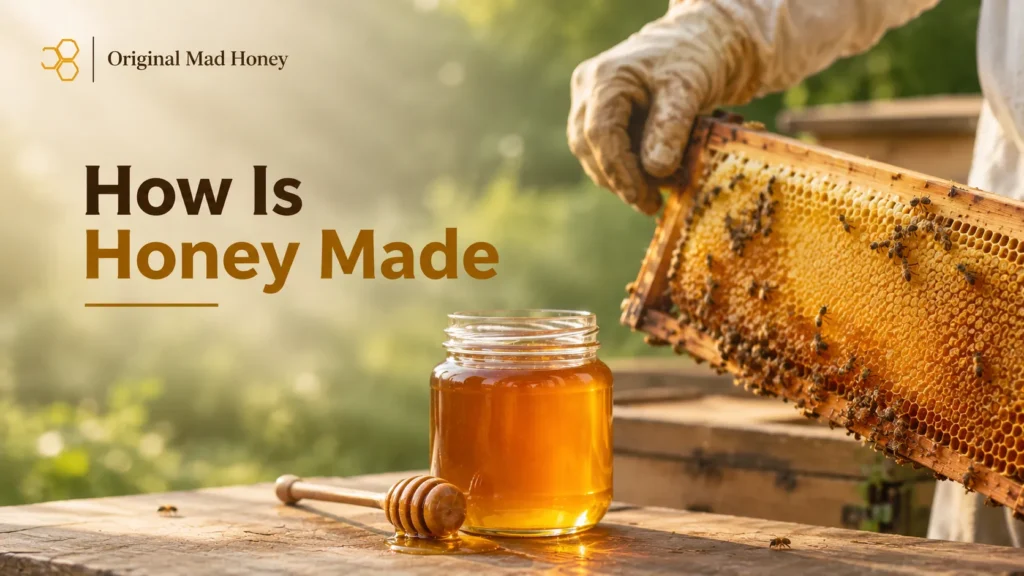
Honey is made by bees. Foragers collect flower nectar, house bees add enzymes and dry it in the hive, and the finished honey is sealed in wax. Beekeepers then spin it out of the comb, strain it and bottle it.
That is the short answer, and it is the same whether you ask how honey is made or how is made honey. The rest of this guide shows each step in order, explains why the process works, and compares honey from a beekeeper with honey from a factory. Last updated November 2026.
How do bees make honey? It starts with older worker bees called foragers. Some foragers act as scouts. They find flowers rich in sugary nectar and tell the rest of the hive where to fly.
A forager lands on a flower and uses her tongue like a straw to drink the nectar. She stores it in a special pouch called the honey stomach. This pouch is separate from the stomach she uses to digest her own food. A single forager can visit up to 5,000 flowers in one day, according to the Carolina Honeybee guide listed in the sources.
The change begins the moment the nectar is collected. Enzymes from the bee turn sucrose, the main sugar in nectar, into glucose and fructose. This is how a honey bee produces honey: she changes the nectar chemically, so honey is a different food from nectar, not only a thicker version of it.
These simpler sugars stay dissolved more easily and help the honey keep for a very long time.
Back at the hive, the forager passes her load to a house bee. That bee passes it on again, and the nectar moves from mouth to mouth through several bees. Scientists call this trophallaxis. Each handover adds more enzymes and lets more water leave the drop.
Some people call honey bee vomit. That is not accurate. Bees do not vomit nectar. They move it out of a storage pouch, which is closer to carrying a drink in a bottle than to being sick.
Fresh nectar is about 80 percent water. Finished honey is about 20 percent water or less. Bees have to remove most of that water, or the honey would ferment.
They spread thin layers of nectar in the wax cells. Then house bees fan their wings to push warm, dry air across the comb. The water evaporates, and the nectar thickens into honey.
When the honey is dry enough, the bees seal each cell with a thin cap of fresh beeswax. The cap keeps moisture out and protects the honey from mold and spoilage. A capped frame is the first sign to a beekeeper that the honey is ripe.
It takes about two million flowers to make one pound of honey. A single bee makes only a tiny share of that in her whole life, so honey is the work of the entire colony. The numbers explain why real honey is not cheap to produce, and why very low prices should make you ask questions.
Honey bees make honey as winter food. Flowers do not bloom all year, so the colony stores more than it needs while nectar is plentiful. We explain the reason in detail in our guide on why bees make honey.
Not all bees make honey in a way people can harvest. Honey bees do, and so do a few related species, such as the giant honey bee that nests on Himalayan cliffs.
People who search for honey how made usually want the farm side of the story, so here is the harvest in order. Most beekeepers follow the same steps:
A beekeeper can also check ripeness with a tool called a refractometer, which measures the water in the honey. Most beekeepers aim for about 15.5 to 18.5 percent water. The United States grade standards for extracted honey also set limits on moisture, which is why the water level matters so much.
Large producers use the same basic steps, but at a bigger scale and often with heat. Many bottlers warm the honey so it flows through fine filters faster. Some also pasteurize it, which means heating it to a set temperature to slow crystallization and kill yeast.
| Raw honey | Filtered honey | Pasteurized honey | |
|---|---|---|---|
| Heating | None or very gentle | Often warmed | Heated to a set temperature |
| Filtering | Light straining | Fine filtering | Fine filtering |
| Pollen | Stays in | Mostly removed | Mostly removed |
| Look | Cloudy, may crystallize faster | Clear | Clear and stays liquid longer |
There is no single legal meaning of raw honey in the United States, so a label alone proves little. Our guide on what raw honey is shows what to look for, and our page on how raw honey differs from regular honey compares the two side by side.
The FDA describes honey as a thick, sweet, syrupy substance that bees make from the nectar of plants. If a product has added syrup, it cannot be sold under the name honey alone. It must be labeled as a blend. The simple rule is to check that the ingredient list says only honey.
The flower decides the color, taste and thickness. Clover gives a mild, light honey, while buckwheat gives a dark and strong one. You can see the main kinds in our guide to the types of honey.
Mad honey follows the same bee process, but the flowers and the harvest are far from ordinary. The giant honey bees of the Himalayas feed on wild rhododendron nectar. This nectar carries a natural compound called grayanotoxin, and it ends up in the honey.
Gurung honey hunters then climb steep cliffs in Lamjung and collect the comb by hand, using the methods their families have used for generations. The full story of the Gurung honey hunters shows how they do it. Because the honey carries grayanotoxin, it is not an everyday honey, and the known mad honey side effects are worth reading before you try it.
This section is general information. Pregnant women, children, people with heart conditions and anyone taking heart medicine should not use mad honey. Speak to a doctor first. Never give any honey to a child under one year old.
How is honey made step by step?
Bees collect nectar, add enzymes, pass it between bees, dry it by fanning their wings and seal it in wax. A beekeeper then harvests, strains and bottles it.
How long does it take to make honey?
The drying and ripening in the hive usually takes a few days, depending on the nectar and the weather. A colony fills a full frame over weeks of foraging.
How is honey made without hurting bees?
Responsible beekeepers leave enough honey in the hive for the colony to eat, and they reuse the drawn comb.
What is the difference between nectar and honey?
Nectar is mostly water and sucrose. Honey is thick, low in water and rich in glucose and fructose, because bees add enzymes and remove the water.
Is honey bee vomit?
No. The bee stores nectar in a separate honey stomach and passes it to other bees. She does not digest it.
Can honey go bad?
Properly ripened honey keeps for a very long time. Storage matters most, and how long honey lasts depends on the jar, the heat and the moisture.
Why does honey crystallize?
Glucose separates from the water over time. Crystallized honey is normal, and gentle warming turns it liquid again.
This article gives general information and is not medical advice.
Honey is good for you in a few specific ways, but it is not a health food. It can soothe a cough, help burns heal when doctors use medical grade
Mad honey is legal to buy and own in Texas, based on the laws I checked. Texas does not list grayanotoxin, the natural compound in mad honey, as a controlled
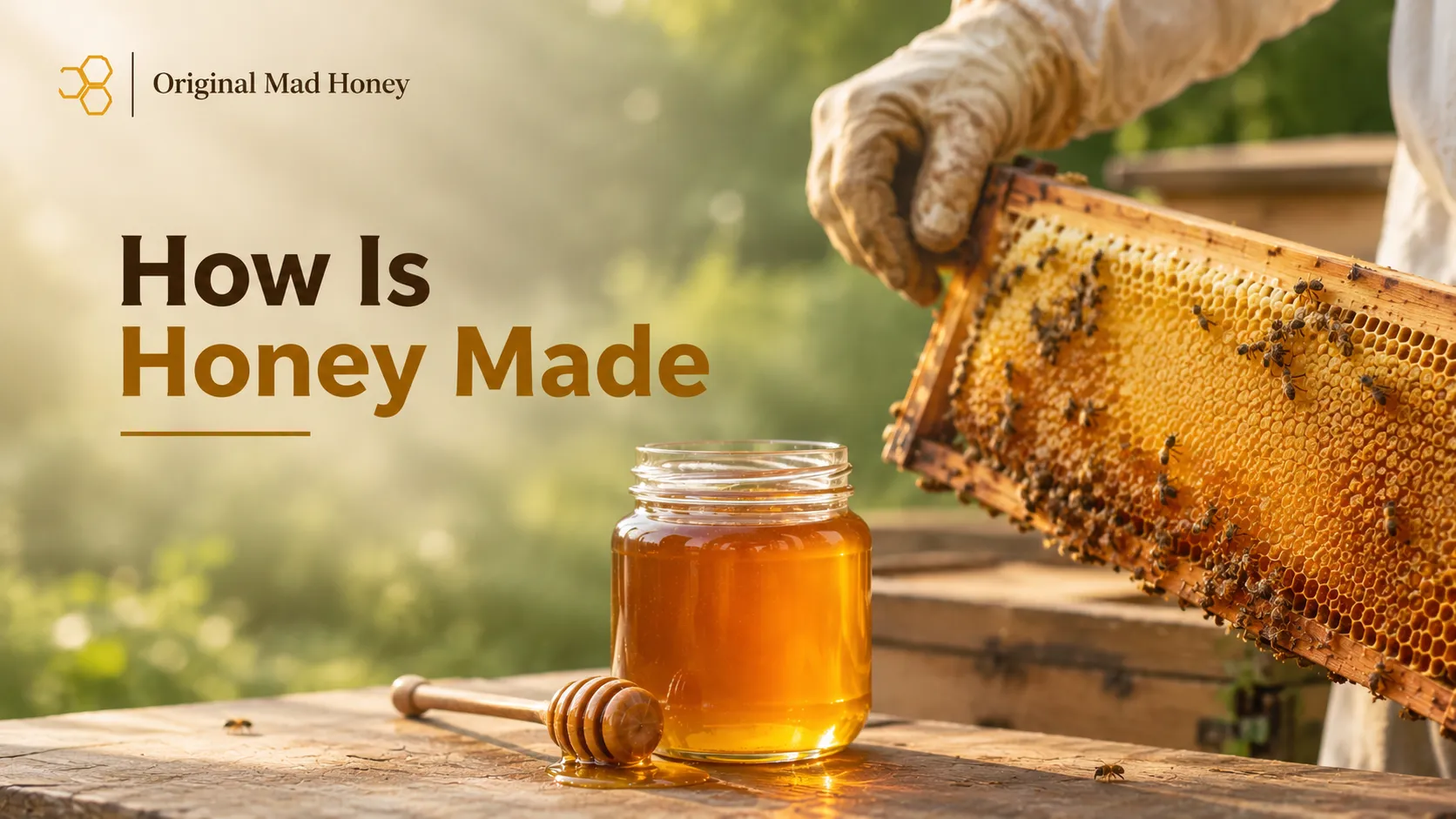
Honey is made by bees. Foragers collect flower nectar, house bees add enzymes and dry it in the hive, and the finished honey is sealed in wax. Beekeepers then spin