

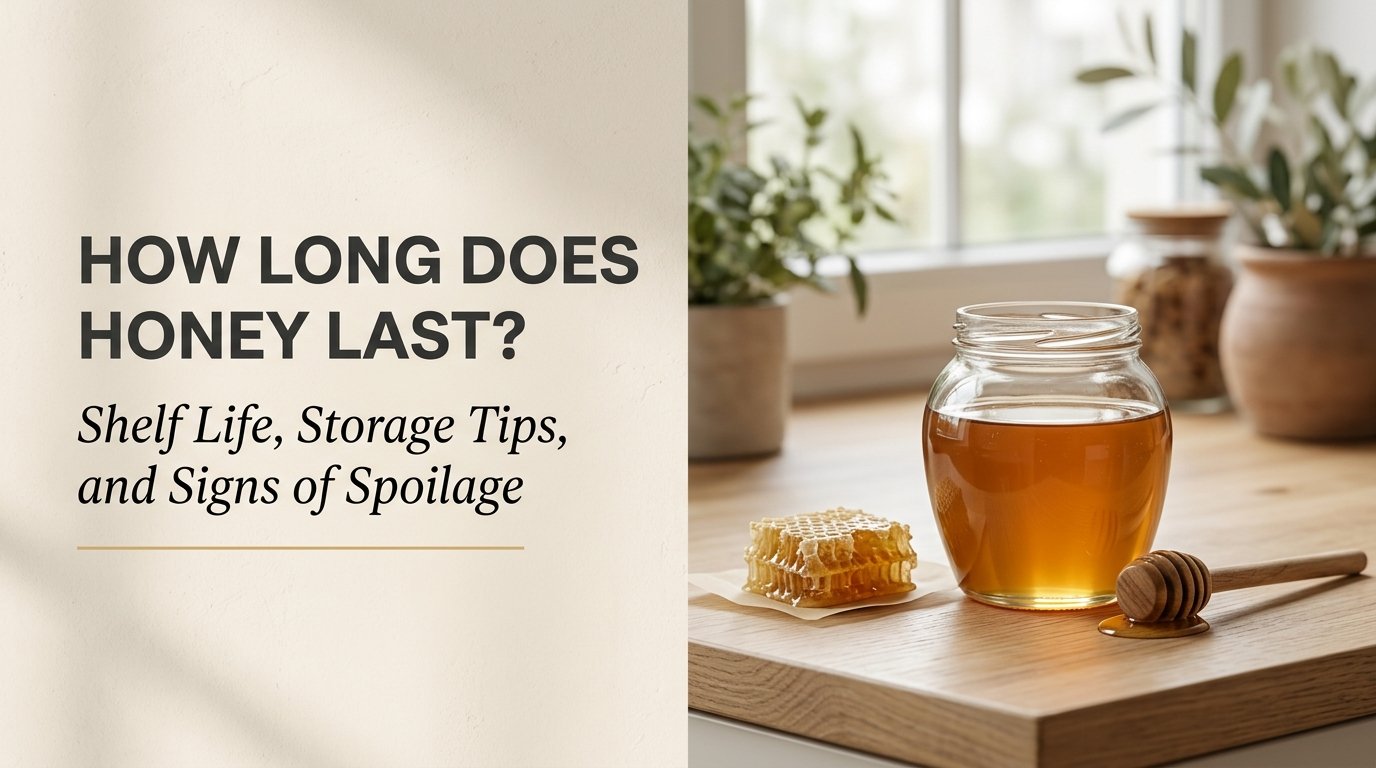
How Long Does Honey Last? Shelf Life, Storage Tips, and Signs of Spoilage
Honey that is sealed, dry and clean can last for years, and well kept pure honey can stay usable long after the date printed on the jar. That is the
You can buy mad honey in India from Original Mad Honey, a Nepal cliff honey that comes with a batch number and a lab report for the exact jar you receive. Choose the 250 g jar if you are buying for the first time, or the 500 g jar if you already know the honey. This page covers the price, how ordering and delivery work for Indian addresses, the legal rules, and the safety facts you should read before you order.
Mad honey is honey that contains grayanotoxins, and it can poison you if you eat too much. We sell it, so we have a commercial interest, and we will tell you what we could and could not verify.
Mad honey costs more than regular honey because bees make it on remote cliffs and hunters collect it by hand. Wikipedia reports that wholesale red honey sells for several times the price of ordinary honey from related bees.
| Jar | Size | Best for | |
|---|---|---|---|
| Original Mad Honey 250 g | 250 g | First time buyers who want to check the batch report | |
| Original Mad Honey 500 g | 500 g | Repeat buyers who know the honey |
For context, we reviewed Indian marketplace listings in 2026 and saw “Himalayan mad honey” priced at roughly ₹1,000 to ₹1,500 per 100 g. At that rate, a 250 g jar would cost about ₹2,500 to ₹3,750 and a 500 g jar about ₹5,000 to ₹7,500. Prices change quickly, so treat these numbers as a snapshot, not a promise.
A very low price is a warning sign, not a bargain. Cliff honey is scarce, and two jars with the same label can hold very different honey. A batch lab report tells you which one you are buying.
We do not promise cures, “safe doses,” or guaranteed effects, because no evidence supports those promises. Anyone who sells mad honey with those claims is selling something other than honey.
Ordering mad honey in India takes five steps.
Delivery time to India: 7 to15 days
If a parcel is held at customs, contact us with your order number.
| Question | 250 g jar | 500 g jar |
|---|---|---|
| Is this your first order? | Yes, start here | Better for repeat buyers |
| Do you want to read the batch report before you commit? | Yes | Yes |
| How long will the jar last? | Depends on how often you use it | Depends on how often you use it |
A jar size is not a serving size. No research defines a safe amount of mad honey, and hospitals have treated poisoning after about one to two teaspoons of wild honey in Nepal. The research on mad honey dosage shows why no amount counts as automatically safe. If you have any health condition or take any medicine, talk to your doctor before you try it.
You can find mad honey in India in several places, and they differ a lot.
| Where you buy | What to expect | What to check |
|---|---|---|
| A brand website with batch reports | Batch number and lab result, a named origin | That the report matches the jar |
| Large online stores | Many “mad honey nepal” results turn out to be ordinary forest honey | The word “NMR tested” is not a grayanotoxin test |
| B2B and wholesale marketplaces | Wide price range and mixed information | The seller’s FSSAI license number and a lab report |
| Social media or messaging sellers | Often no batch information and no returns | Avoid cash only sales with no proof |
| Local shops in hill areas | Honey of unknown strength and origin | Ask for the species, region, season, and a test |
Use this checklist with any seller, including us:
We found no Indian law that bans mad honey by name, and we found no source that lists grayanotoxin among India’s narcotic or psychotropic substances. Honey falls under the Food Safety and Standards Act, 2006, which gives FSSAI the power to regulate how food is made, stored, sold, and imported. Mad honey must therefore meet food rules on purity, labeling, and licensing, and FSSAI can refuse imported food that breaks them.
Be careful with absolute claims. Some sellers say mad honey is fully legal in India, and one website says India bans it. We could not confirm either claim. One independent review found that “ban” claims for India appear mostly on seller sites and not in citable law. Customs officers have discretion, and rules can change, so ask FSSAI or a customs broker before you import a large amount. We are not lawyers. For countries beyond India, is mad honey legal worldwide has a different answer in each place.
Most mad honey on sale in India comes from Nepal, but rhododendrons also grow across the Indian Himalaya, so honey with grayanotoxin can come from inside India. A Nepal case series describes the toxic species as native to the mountains of Nepal, India, Bhutan, and Turkey. Health authorities have noticed: the Hong Kong Centre for Health Protection advised the public to pay special attention to honey from India, Nepal, and the Black Sea region of Türkiye, because grayanotoxin poisoning cases have linked to honey from those areas.
That is why the label matters more than the word forest honey. Himalayan mad honey comes from giant cliff bees that feed on rhododendron flowers in spring, and only a lab can tell you how strong a batch is.
Mad honey contains grayanotoxins, which keep sodium channels in nerve cells open and can slow the heart and lower blood pressure. Grayanotoxin poisoning causes dizziness, nausea, vomiting, blurred vision, a slow heart rate, and low blood pressure. A review of 1,199 cases found no deaths, but many patients needed hospital treatment with atropine and fluids. A Utah Poison Control Center case file describes a woman who ate mad honey obtained from India and developed chest pain, lightheadedness, hallucinations, and low blood pressure.
The Hong Kong health authority also advised buyers to discard honey with a bitter or astringent taste, because grayanotoxin honey can cause a burning sensation in the mouth and throat. Reports of mad honey side effects range from mild dizziness to hospital care, so weigh them before you order.
Do not buy mad honey if you:
Call 112, India’s emergency number, or your local ambulance service if you feel faint, notice a very slow pulse, or struggle to stay alert after eating mad honey. Tell the medical team that you ate mad honey, and give the amount and the time.
Yes. Sellers list mad honey on Indian marketplaces and brand sites, and you can order Original Mad Honey in a 250 g or 500 g jar. Quality varies, so ask for the FSSAI license number and a batch lab report with a grayanotoxin result.
[ADD a clear yes or no, plus the courier, the delivery time, and the shipping cost for Indian addresses.]
Listings we saw in 2026 ranged from about ₹1,000 to ₹1,500 per 100 g. Our 250 g and 500 g jars cost . A very low price deserves questions.
Customs can hold or refuse a food import that breaks FSSAI rules. We could not verify a personal use exemption, so ask the seller who handles duties and clearance before you pay. [ADD your process.]
We found no Indian law that bans mad honey by name or lists grayanotoxin as a controlled substance. FSSAI food rules apply to sale and import, and customs officers have discretion. Check with FSSAI or a customs broker before you import or sell it.
Color and taste are not reliable. Check the FSSAI license number, the batch number, the origin and season, and a lab report that shows a grayanotoxin result. “NMR tested” only screens for added sugar.
Buyers who are new to mad honey usually start with the 250 g jar so they can read the batch report before committing to a larger size. A jar size is not a serving size, so talk to your doctor if you have any health condition.
Honey that is sealed, dry and clean can last for years, and well kept pure honey can stay usable long after the date printed on the jar. That is the
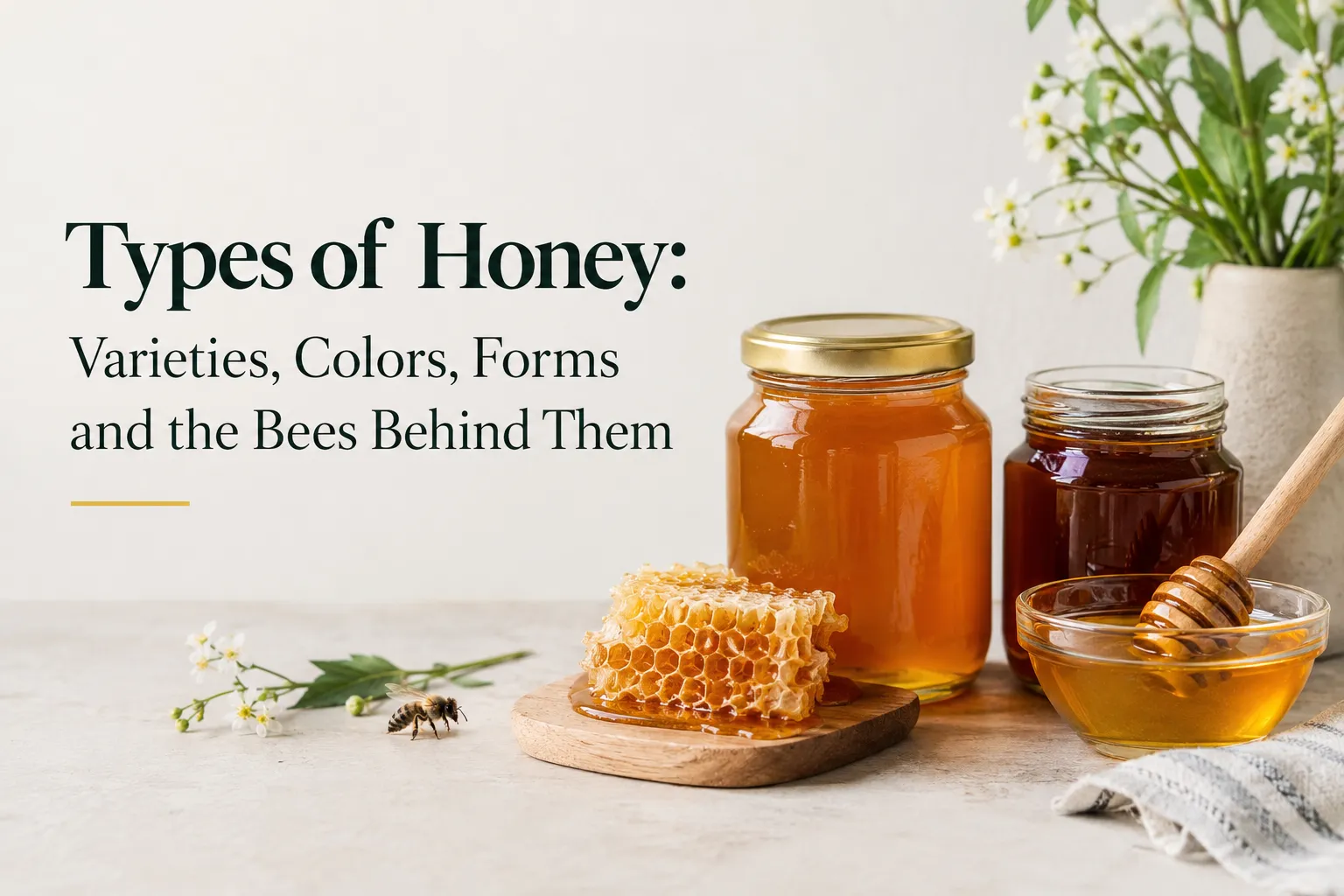
There are four ways to sort the types of honey: by the flower the bees visited, by color, by form such as raw or creamed, and by the species of
Honey benefits for men are real but modest. The best human evidence shows that honey can lower fasting blood sugar and cholesterol when it replaces other sugar, and that it