

How Long Does Honey Last? Shelf Life, Storage Tips, and Signs of Spoilage
Honey that is sealed, dry and clean can last for years, and well kept pure honey can stay usable long after the date printed on the jar. That is the
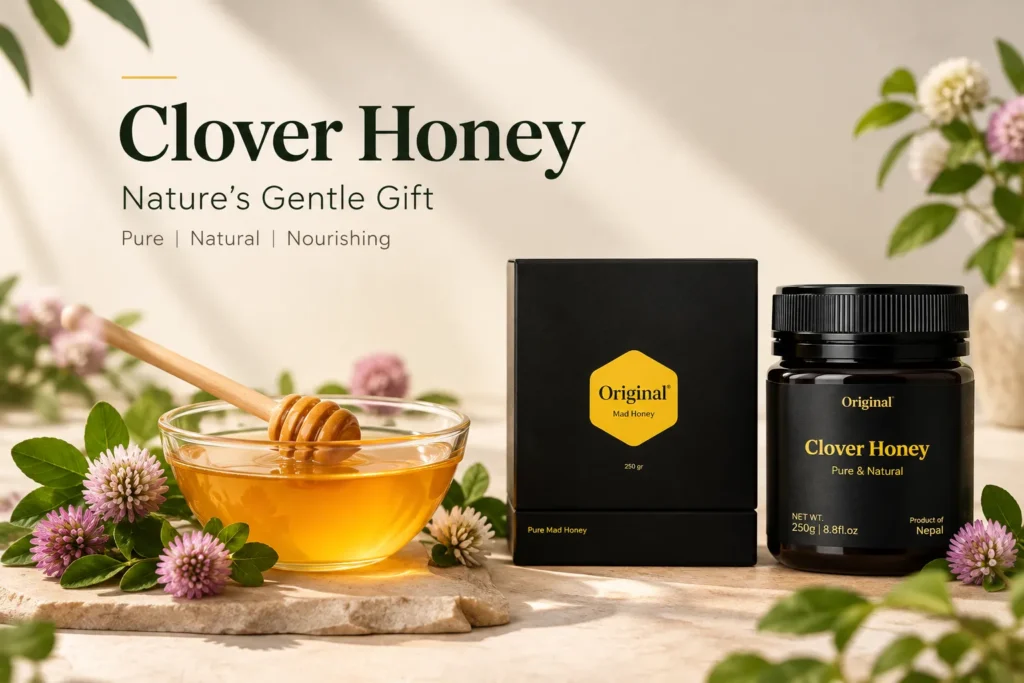
Clover honey is the honey most people picture when they hear the word honey. It’s the light golden jar sitting on nearly every supermarket shelf, the default choice in restaurant tea service, and by a wide margin the most widely produced honey type in the United States. But being common doesn’t mean it’s simple. Its mild flavor, light color, and everyday versatility come from a specific plant, a specific bee, and a specific production process, and understanding all three makes it far easier to judge real quality the next time you’re standing in front of a shelf of honey jars.
Clover honey is a monofloral honey, meaning it’s made predominantly from the nectar of one plant family, clover (Trifolium species), most commonly white clover and red clover. It has a light golden to pale amber color, a mild, clean, sweet flavor with a subtle floral note, and it’s one of the most affordable and widely available raw honey varieties in North America. Nutritionally, it offers modest amounts of antioxidants, primarily flavonoids and phenolic acids, along with trace vitamins and minerals, though it’s lower in antioxidant content than darker honeys like buckwheat or manuka. The United States produced roughly 134 million pounds of honey in 2024, and clover is consistently among the largest single honey types behind that total, concentrated heavily in North Dakota, South Dakota, and the surrounding Prairie Pothole region. It crystallizes faster than most other honey varieties and works best as an everyday, family-friendly sweetener rather than a specialty or medicinal honey.
To really answer what clover honey is, you have to start with the plant, not the jar. Clover honey isn’t a brand or a marketing term. It’s a monofloral classification, meaning beekeepers place hives near large fields of clover during its bloom period, so the resulting honey is predominantly, though never entirely, made from clover nectar. The genus responsible is Trifolium, and two species do most of the work: white clover (Trifolium repens), a low-growing perennial widely used as pasture and cover crop, and red clover (Trifolium pratense), a taller variety often grown in hay and forage rotations. Both are legumes, meaning they fix nitrogen in the soil, which is part of why they’re planted so extensively across American and Canadian farmland independent of any honey production at all.
This is actually the deeper reason clover honey exists at the scale it does. Clover isn’t cultivated primarily to feed bees. It’s cultivated as livestock forage and a soil-health crop, and honeybees simply take advantage of the enormous nectar supply that results. Clover’s blooms are also remarkably reliable and weather-hardy compared to more delicate wildflower sources, which gives beekeepers a nectar flow they can count on season after season, and that consistency is a big part of why clover honey tastes and looks so uniform from jar to jar compared to more variable honey types.
According to USDA National Agricultural Statistics Service data, United States honey production totaled 134 million pounds in 2024, produced across 2.60 million honey-producing colonies, with an average yield of 51.7 pounds per colony. North Dakota alone accounted for a striking share of that total. In 2025, the state produced 30.82 million pounds of honey, nearly three times the output of the next-largest producing state, from roughly 460,000 colonies averaging 67 pounds each, worth an estimated 58.3 million dollars.
Much of that dominance comes down to clover specifically. North Dakota and the surrounding Prairie Pothole region, spanning the Dakotas and eastern Montana, is widely regarded as one of the best honeybee forage environments on Earth, where sweet clover, alfalfa, sunflower, and canola bloom in sequence from May through September. South Dakota, California, Florida, and Texas round out the country’s other leading honey-producing states, though clover-driven production is most concentrated in the northern Plains states specifically.
Clover honey has a mild, clean sweetness with a subtle floral undertone, generally regarded as one of the gentlest, most approachable honey flavors available. It doesn’t have the bold, almost molasses-like intensity of buckwheat honey, and it lacks the distinct medicinal, earthy character of manuka honey. That mildness is exactly why it’s the default choice for tea, coffee, baking, and general everyday use, since it complements other flavors instead of overpowering them.
Its color ranges from nearly white to light amber, and as a general rule with honey, lighter color tends to correlate with a milder flavor. Bloom timing affects this too. Honey from earlier clover blooms tends to be paler and milder, while honey harvested later in the season can develop a slightly deeper color and flavor as other nearby wildflowers contribute small amounts of nectar alongside the dominant clover source.
A standard one tablespoon (21 gram) serving of clover honey provides approximately:
Clover honey’s phenolic content is generally measured in the moderate range, lower than darker honeys like buckwheat, but still meaningfully higher than refined white sugar, which contains essentially no micronutrients or antioxidant compounds at all. Because clover honey is almost entirely simple sugars, it should still be treated as a sweetener rather than a significant nutrient source, valuable more for what it offers beyond sugar than as a primary vitamin or mineral source.
Antioxidant support. Clover honey contains flavanols and phenolic acids, plant compounds that help neutralize free radicals, the unstable molecules linked to cellular damage and a range of chronic diseases over time.
Heart health support. Some research suggests the flavanols in clover honey may help support healthy blood pressure and modestly improve cholesterol markers, though most researchers note that more robust clinical research is still needed to confirm the size of this effect in humans specifically. A 2022 systematic review and meta-analysis published in Nutrition Reviews, covering 18 clinical trials and over 1,100 participants, found that honey consumption, including lighter varieties, was associated with measurable reductions in fasting blood glucose, total cholesterol, LDL cholesterol, and triglycerides.
Sore throat and cough relief. Clover honey’s thick texture and mild antibacterial properties make it a common home remedy for soothing a sore throat, and it’s frequently used in traditional cold and cough remedies for this reason.
Antibacterial activity. Like most raw honey, clover honey naturally contains hydrogen peroxide, produced by an enzyme bees add during nectar processing, which gives it a mild, ongoing antibacterial effect even without any additional processing.
It’s worth being precise about the limits here. Clover honey is nutritionally beneficial as a natural sweetener, but it isn’t a medicinal-grade honey the way manuka honey is often marketed, and its antioxidant content is meaningfully lower than darker varieties. Anyone considering honey for a specific health condition should treat it as a supportive dietary choice, not a substitute for medical treatment, and should speak with a doctor about any condition they’re managing.
Clover honey’s mildness makes it one of the most versatile honeys in the kitchen, which is part of why it’s the default choice in so many recipes.
| Honey Type | Color | Flavor | Antioxidant Level | Best For |
|---|---|---|---|---|
| Clover honey | Light golden to pale amber | Mild, clean, subtly floral | Moderate | Everyday sweetening, tea, baking |
| Wildflower honey | Amber, variable | More complex, varies by season and region | Moderate to high | Those wanting more floral variation |
| Buckwheat honey | Dark brown | Bold, malty, almost molasses-like | High | Those wanting a stronger, more medicinal flavor |
| Manuka honey | Dark amber | Earthy, robust | High, with unique antibacterial compounds | Targeted wound care and antibacterial use |
| Mad honey | Reddish-brown to dark mahogany | Bitter, earthy, sharp | Contains grayanotoxin, not comparable on a standard antioxidant scale | A distinct, potent, wild-harvested specialty honey |
This comparison matters because both are real, natural honeys, but they exist on almost opposite ends of the honey spectrum. Clover honey is produced from managed hives placed near enormous, common clover fields, harvested at industrial scale across millions of colonies, and prized specifically for being mild and consistent. Mad honey is the opposite in nearly every respect. It comes from wild colonies of the giant Himalayan honey bee, harvested by hand from remote cliff faces in Nepal, and it’s prized specifically for being potent, rare, and anything but mild.
The two honeys aren’t competitors in any real sense. Clover honey is what you reach for every day, on toast, in tea, in a recipe, produced across millions of pounds a year in the American Midwest alone. Mad honey is a specialty product taken in small, deliberate amounts, tied to a completely different rhododendron nectar source and a naturally occurring compound called grayanotoxin that clover nectar simply doesn’t contain. If you’re curious how that specific compound behaves and why it makes mad honey so different from every other honey on this list, our full guide on what mad honey actually is covers the botany and chemistry in detail, and our guide to mad honey’s origin explains exactly why that kind of honey can only come from two places on Earth.
Yes, and relatively quickly compared to many other honey varieties, often within one to three months of bottling. This is due to its naturally high glucose-to-fructose ratio, since glucose is the sugar that separates out of solution first. Crystallization is not a sign of spoilage. It’s a normal physical process, and it’s actually one of the reasons clover honey is a popular base for creamed honey, a deliberately whipped, spreadable form that’s made by intentionally controlling that same crystallization process. If you’re wondering whether crystallized honey is still safe, our detailed guide on whether honey can go bad walks through exactly how to tell normal aging from actual spoilage.
Not all clover honey on the shelf is equal, and a few checks help separate genuinely good raw honey from heavily processed, blended products:
Q: Is clover honey healthier than regular honey?
A: Clover honey is a type of regular honey, not a separate category. Compared to other monofloral honeys, it has a milder flavor and moderate antioxidant content, generally lower than darker varieties like buckwheat or manuka, but it still offers more nutritional value than refined sugar.
Q: Why does clover honey crystallize so quickly?
A: Clover honey has a relatively high ratio of glucose to fructose, and glucose is the sugar that crystallizes out of solution first. This makes clover honey one of the faster varieties to solidify compared to honeys with more fructose.
Q: Is clover honey the same as wildflower honey?
A: No. Clover honey is monofloral, made predominantly from one plant source, clover. Wildflower honey is polyfloral, made from a mix of whatever flowers are blooming in a given area and season, which gives it more flavor variation from batch to batch.
Q: Which US states produce the most clover honey?
A: North Dakota is by far the largest overall honey producer in the country, driven heavily by clover and sweet clover forage across the Prairie Pothole region, followed by South Dakota, California, Florida, and Texas.
Q: Can clover honey help with a sore throat?
A: Many people use it for exactly this, thanks to its thick texture and mild natural antibacterial properties, and it’s a common ingredient in home remedies and over-the-counter cold formulations.
Q: Is clover honey vegan?
A: No. Honey is an animal product made by bees, so it doesn’t meet the standard definition of a vegan food, regardless of the floral source.
Q: How is clover honey different from mad honey?
A: They’re entirely different products. Clover honey is a mild, mass-produced honey from common clover fields with no notable physiological effects. Mad honey is a rare, wild-harvested honey containing grayanotoxin from rhododendron nectar, known for its potency rather than its mildness.
Original Mad Honey specializes in rare, wild-harvested Himalayan mad honey, lab-tested and traceable to its exact harvest region in Nepal. If you’re curious how it compares to everyday honey varieties like clover, our full guide explains the difference.
Honey that is sealed, dry and clean can last for years, and well kept pure honey can stay usable long after the date printed on the jar. That is the
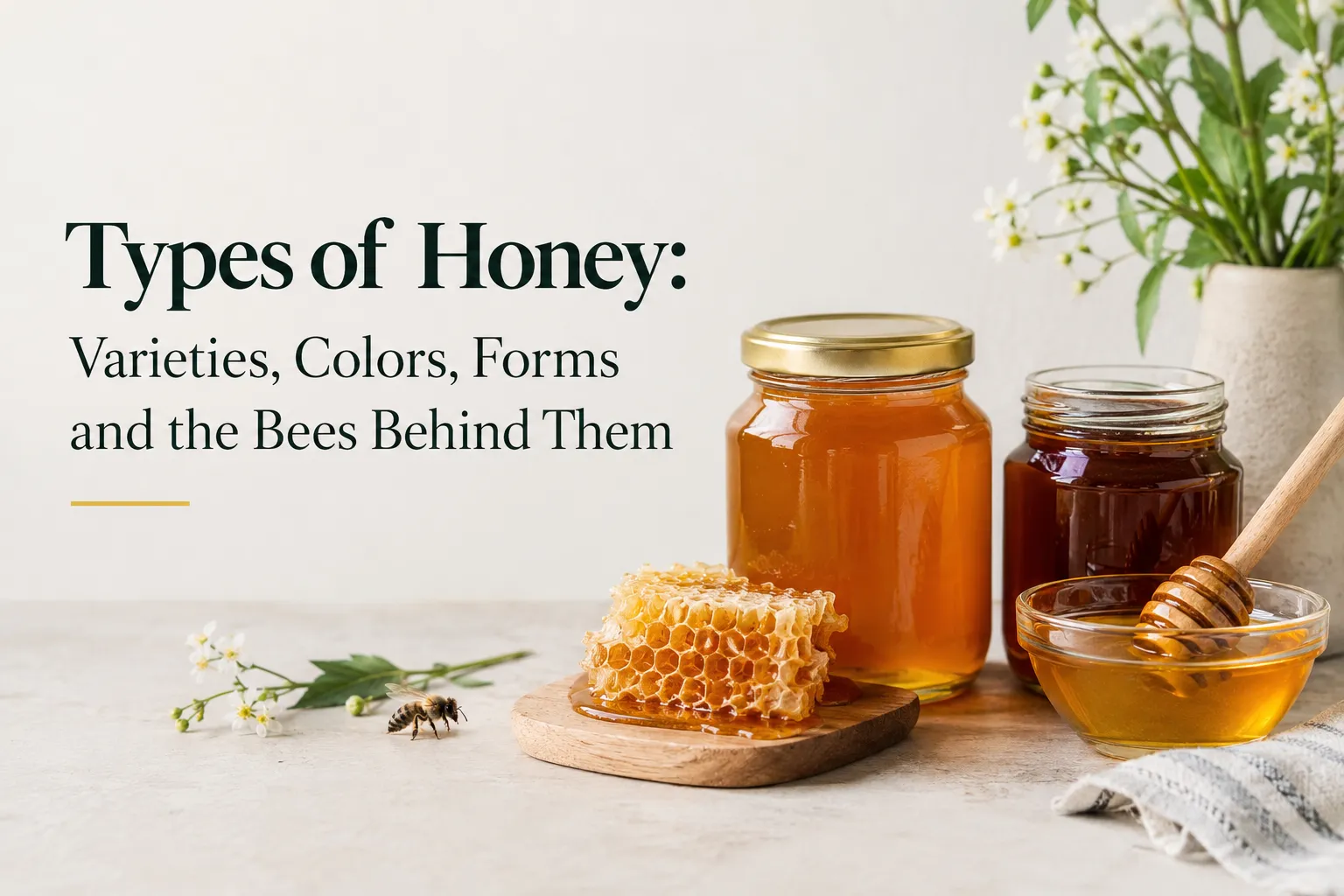
There are four ways to sort the types of honey: by the flower the bees visited, by color, by form such as raw or creamed, and by the species of
Honey benefits for men are real but modest. The best human evidence shows that honey can lower fasting blood sugar and cholesterol when it replaces other sugar, and that it